
Portable Vs Built-In Braai: Which Is Best for Your Home
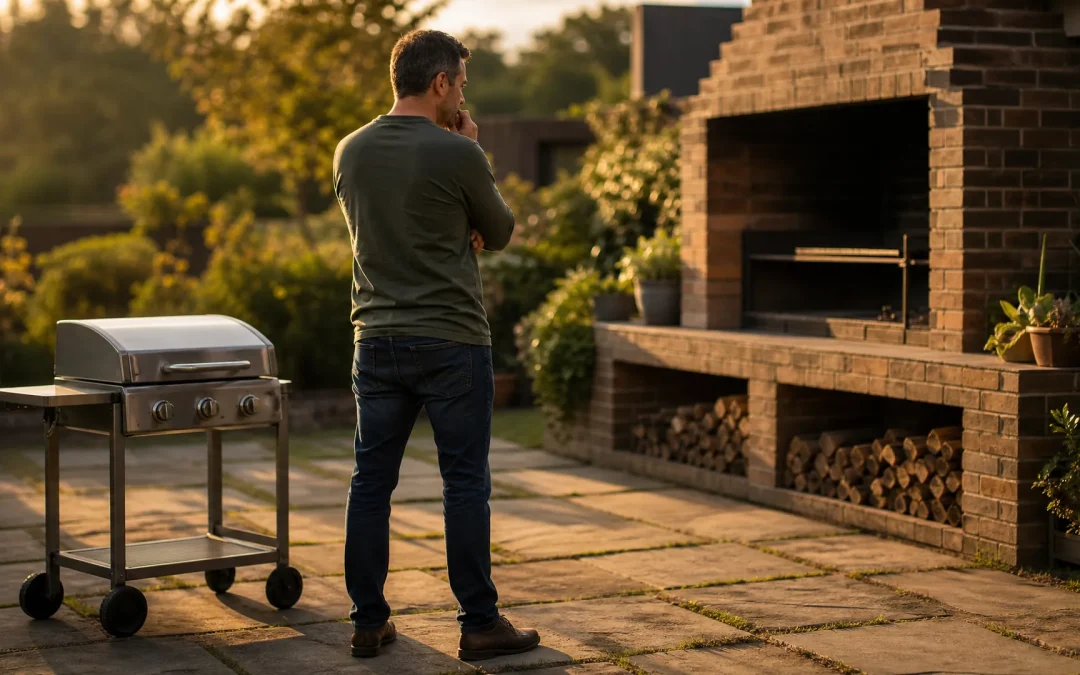
The question of portable vs built-in braai which is best comes up constantly, and most buying guides answer it the wrong way. They lead with BTU ratings, grate dimensions, and materials. Those things matter, but they’re not where the decision starts. The right starting point is always you: how you live, who you feed, and what your outdoor space actually looks like week to week.
South Africans braai more per capita than almost any other nation. The braai is a social ritual as much as a cooking method, which means getting the setup wrong has a real cost, not just financially, but in how often you actually use your outdoor space. Get it right, and you’ll be firing up every other weekend. Get it wrong, and it becomes a garden ornament.
Why the Braai Type Comparison Starts With Your Lifestyle, Not the Product
Most braai type comparisons skip straight to specs. That’s a mistake.
The Firehouse team has seen it play out repeatedly: someone buys a stunning built-in setup for a rental property they’re leaving in two years, or someone squeezes a massive freestanding braai onto a small balcony that was never going to accommodate it. The braai itself was fine. The fit was wrong.
Before you look at a single product, answer three questions honestly:
- How often do I braai? Weekly, monthly, or only for big occasions?
- Who do I typically entertain? Intimate family dinners, or crowds of 15-plus?
- Is my outdoor space fixed, or likely to change? Owned home with a proper garden, or a rented flat with a shared patio?
Those answers point you toward a braai type faster than any spec sheet.
The Real Benefits of a Portable Braai
Portable braai benefits start with one word: freedom. You’re not locked to a spot, a gas line, or a fixed structure. You can move with the shade, pack it up when it rains, and take it to the farm or the beach.
Beyond flexibility, portability keeps the upfront cost manageable. A quality portable unit, kettle braai, gas cart, or tripod, typically costs a fraction of what a built-in installation runs once you factor in materials and labour. For someone setting up their first outdoor space, that lower barrier matters.
Storage is another real advantage. A kettle braai folds away or sits neatly in a garage corner. A tabletop unit disappears into a cupboard. If your outdoor space doubles as a garden or play area during the week, a portable setup keeps things versatile.
Can a portable braai deliver the same quality cook as a built-in? Yes. A well-designed kettle or gas cart holds heat consistently, handles indirect cooking, and produces the same smoky results. Cook quality comes from technique and fuel management, not whether the braai is bolted into brickwork.
Who the Portable Braai Is Perfect For
A customer in a Joburg townhouse complex with a small patio is a classic portable braai fit, limited space, no permission to build, but still wanting a premium cook on a Saturday afternoon. That profile is very common across South African urban areas.
A portable braai suits you if:
- You rent, or plan to move within the next few years
- Your outdoor space is small, shared, or not entirely your own
- You braai casually rather than hosting large, frequent gatherings
- You want flexibility, braaiing at different spots on your property or travelling with your kit
If that sounds like you, also check out our braai entertaining for beginners guide, it’ll help you get the most out of a portable setup from day one.
Mobile Braai Options Worth Knowing About
The portable category is broader than most people realise. Key formats include:
- Kettle braai, the classic domed unit, excellent for indirect heat and roasting. Handles a whole chicken or leg of lamb without drama.
- Tripod braai, open-fire, traditional, and highly portable. Great for those who want the authentic wood-fire experience anywhere.
- Gas cart braai, wheeled, with burners and often a side shelf. Closest to the convenience of a kitchen stove, outdoors.
- Tabletop braai, compact enough for balconies and camping. Best for smaller households or as a secondary unit.
For a deeper look at which size works for your group, the how to choose the right braai size guide walks through the key considerations. And if space is already tight, best braai options for a small garden covers the formats that perform best in compact outdoor areas.
Built-In Braai Advantages: When Permanence Pays Off
A built-in braai is a commitment, and when the lifestyle fit is right, it’s one of the best investments you can make in your home.
The advantages go beyond cooking. A permanent structure becomes the anchor of your entire outdoor entertaining area. It changes how people move around the garden, where the conversation happens, and how long guests stay. It’s a focal point in a way a portable unit simply isn’t.
For South African homeowners in a freestanding property, a home in the Cape Winelands or KZN North Coast with a dedicated garden entertainment area, for example, a built-in braai pays dividends. It becomes the centrepiece of the whole outdoor space, tying together the seating, the shade structure, and the overall flow of the garden.
There’s also a home value dimension. A well-designed built-in braai area is a genuine selling point in the South African property market. Buyers notice it. Estate agents mention it. It’s an upgrade that pays back.
Cooking capacity is typically larger too. A built-in firebox or braai insert can handle the kind of volume that makes a big Saturday gathering easy, multiple cuts, different heat zones, all managed from one fixed station.
Built-In Braai Design and Your Outdoor Entertaining Space
The design choices you make around your built-in braai shape the whole outdoor experience. A brick surround with integrated countertop space means you’re not hunting for a side table when you need to rest a tray. A shade structure overhead means you braai comfortably in December heat. A built-in at the right height and orientation means the cook is part of the conversation, not separated from it.
Our built-in braai design guide goes deep on layout, materials, and how to match the structure to your garden’s proportions. And if you’re planning a full outdoor entertaining transformation, outdoor entertaining space ideas will give you a broader picture of how a built-in fits into the whole design.
Head-to-Head: Braai Type Comparison Across the Factors That Matter
Cost: Portable braais range from affordable entry-level units to premium kettle or gas cart options. Built-ins require construction, materials, a builder, and potentially a gas line or chimney, so the total investment is significantly higher. The gap narrows over time as a built-in adds property value, but the upfront spend is real.
Installation effort: A portable braai needs no installation. Unbox it, assemble it, light it. A built-in requires planning, building work, and typically a few days of construction minimum. Factor that into your timeline.
Portability: By definition, only one type wins here. A portable braai moves with you. A built-in stays put, which is exactly what you want if you’re staying put too.
Cooking capacity: Built-ins generally win for volume. Large firebox dimensions and fixed cooking surfaces handle serious quantities. High-quality portable units close the gap for everyday use, but for feeding 20 people regularly, a built-in has the edge.
Maintenance: Both need regular cleaning and grate maintenance. Built-ins require occasional checking of mortar, fire bricks, and, if gas-fitted, burner condition. Portable units are simpler to clean but should be stored correctly to extend their life.
Long-term value: If you’re staying in your home for years, a built-in justifies itself. If your situation is uncertain, a quality portable braai holds its usability without tying capital into brickwork.
Choosing the Right Braai: Match Your Setup to Your Situation
Here’s a practical framework. Use it as a guide, not a rigid rule:
Go portable if:
- You rent or expect to move within three years
- Your outdoor space is under 20m², shared, or paved with no building rights
- You braai once or twice a month for a small group
- Your budget is under R8 000–R12 000 all-in for now
Invest in a built-in if:
- You own your home and plan to stay for at least five years
- You have a dedicated garden or patio that can anchor a permanent structure
- You entertain regularly, large family gatherings, frequent weekend braais
- You want the outdoor space to be a proper entertaining area, not just a back garden
Fuel type is the next decision once you’ve landed on braai type, our wood vs gas braai comparison covers that ground clearly. And when you’re ready to narrow down brands, premium braai brands worth the investment gives you a curated shortlist to work from.
The biggest mistake people make, in the Firehouse team’s experience, is choosing a braai based on what looks good on Instagram rather than how they actually use their outdoor space week to week. That built-in you loved on a Cape Town design blog might be a poor fit for a Pretoria cluster home with a north-facing balcony and a body corporate that controls what gets built.
Not Sure Yet? Let Firehouse Help You Decide
At Firehouse, every braai in our range has been hand-selected by people who spend real time around fires, we only stock what we’d actually recommend to a friend planning their outdoor setup. When you browse our range, you’re not wading through catalogue filler. You’re looking at braais we’d put in our own gardens.
If you’ve read this far and still aren’t sure whether portable or built-in is the right call for your specific situation, space, budget, entertaining style, get in touch with the Firehouse team. We’ve helped customers across South Africa match their braai to their lifestyle, and we’re happy to talk through your setup before you spend a cent.
Browse the Firehouse braai range or reach out directly. The right braai for your lifestyle is out there, we’ll help you find it.