
How to Choose a Braai Size for Your Garden
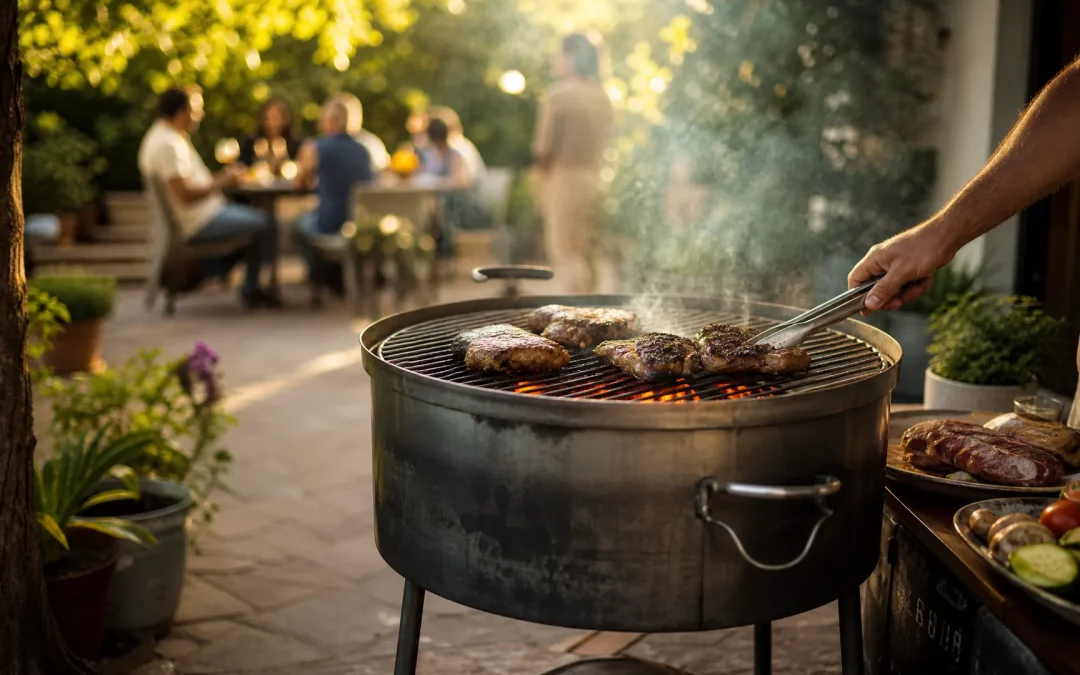
Getting the size wrong is one of the most common, and most avoidable, braai mistakes South Africans make. You fire up for a Heritage Day crowd and the grill is overwhelmed, or you invest in a massive built-in only to use half of it on a typical Tuesday night. Knowing how to choose a braai size is less about reading a spec sheet and more about honest thinking: how you actually live, cook, and entertain. This guide walks you through every variable that matters.
Why Braai Size Matters More Than You Think
A braai that’s too small creates chaos. Meat queues up, timings fall apart, and guests hover hungrily while you make three rounds of chops. A braai that’s too large has its own problems, uneven heat, wasted fuel, and a footprint that swallows a compact patio.
Size is a lifestyle decision, not a spec decision. Before you look at measurements, think about your garden, your household, your weekends, and the kind of fire you actually want to build. The specs follow from that picture, not the other way around.
South Africans braai more frequently per capita than almost any other nation, with many enthusiasts firing up multiple times a month through summer. That makes sizing a genuinely recurring, practical concern, not a one-off purchase you can afford to get wrong and forget about.
Start Here: How Many People Do You Regularly Braai For?
The most reliable starting point is your typical headcount, not your biggest ever occasion, your most common one. Allow one generous portion of grill space per person, factoring in that food needs room to move, rest, and be managed without crowding.
The intimate braai: households of 1–4
This is the weeknight family braai, a quick fire after work, school-run chops, a couple of boerewors rolls on a Friday evening. A compact freestanding braai with roughly 40–50 cm of cooking width comfortably handles four to six portions. It heats up fast, uses less fuel, and fits neatly into a smaller outdoor space. For most South African households, this tier covers the majority of braai occasions across the year.
The social braai: 5–10 guests
Weekend gatherings, a small Springbok match with friends, a birthday Sunday lunch, this is where a mid-range unit earns its keep. You want a cooking width in the 55–65 cm range, enough surface to run meat and sides simultaneously without a bottleneck. Freestanding options at this size remain manageable in a medium-sized garden, and built-in braais at this scale are a popular choice for established outdoor entertaining areas.
The entertainer: 10+ people
Heritage Day. A year-end function. Rugby weekends with the extended family. A large built-in braai typically offers 70 cm or more of grill width and is best matched to households that entertain 10 or more guests regularly. At this scale, a built-in makes structural sense because you’re committing to a permanent entertaining setup anyway. The investment matches the lifestyle.
Braai Sizing Guide: Matching Dimensions to Your Setup
Understanding the cooking surface is only half the picture. Physical footprint, clearance, and permanence all shape the right choice.
Fixed built-in braais vs. freestanding units
Built-in braais lock in a size permanently. Once the brickwork is done and the counters are poured, you’re committed, which makes careful upfront planning essential. Choosing braai dimensions for a built-in means measuring not just the firebox opening, but the full structure depth, the countertop surround, and the clearance to combustible surfaces (walls, timber pergolas, shade cloth).
Freestanding units offer flexibility. You can reposition them, take them to a family farm, or upgrade without demolition. That flexibility also means you can be more conservative with size now and scale up later, something a built-in doesn’t allow.
How garden or patio space shapes your choice
A large braai in a small space is a safety issue as much as an aesthetic one. Most manufacturers specify minimum clearances, typically 1 m to combustible surfaces on the sides and rear. On a narrow patio, that clearance requirement can rule out mid-to-large units entirely.
Measure your available footprint first, then subtract the required clearances, and only then look at cooking surface options within what remains. If your outdoor space is compact, explore the best braai options for a small garden, there are smart, well-designed units that punch above their physical size.
A level, solid surface is non-negotiable for larger freestanding and all built-in units. Uneven ground creates uneven fires and, more seriously, tipping risks.
Fuel Type Changes the Equation
Wood, charcoal, and gas braais are not equivalent in size terms, even when their cooking surfaces look similar on paper.
Wood and open-flame braais need a deeper, taller firebox to generate and manage heat properly. The firebox has to accommodate a proper fire bed, airflow, and the radiant heat that defines a real wood braai. A wood unit with a 50 cm grill width will be physically bulkier overall than a gas unit of the same cooking capacity.
Charcoal sits in the middle, it needs less firebox depth than wood but more than gas. Gas braais can offer generous cooking surfaces in compact overall dimensions because the heat source is contained and controlled. If space is tight, gas often gives you more cooking area per square metre of patio footprint.
Fuel choice also affects how you manage the fire for a crowd. Gas gives you instant, zoned control, useful when cooking for 10 or more in stages. Wood and charcoal reward patience and skill, and the braai size needs to support longer cooking times without rushing.
How Often You Entertain: The Factor Most People Overlook
Frequency of use is the underrated variable in any sizing decision, and most people ignore it entirely.
Someone who braais twice a week through summer has fundamentally different needs from someone who fires up four times a year. The frequent braai-er wants a unit that’s efficient at their normal scale, easy to light, quick to clean, and right-sized for two to six people. The occasional entertainer might feel the pull of a larger unit, but rarely has the justification.
The single most common sizing mistake is buying for the biggest occasion rather than the most frequent one. A braai used mainly for four people but occasionally for twenty is better served by a well-sized mid-range unit paired with a portable supplementary option than by a cavernous fixed braai that’s overkill most of the year. A secondary kettle braai or a skottel for sides costs a fraction of upsizing your main unit, and it’s more practical.
If you genuinely entertain large groups regularly, more than once a month during season, then sizing up is absolutely justified. But be honest about the word “regularly.”
Choosing the Right Braai Brand and Size Together
Once you know your typical headcount, your space, your fuel preference, and your entertaining frequency, you’re ready to match that picture to a specific product.
Premium South African braai brands, Cadac, Skottelbraai, Braai Worx, and others, publish well-defined size ranges with clear capacity guidance. They’ve done the engineering work so that a stated cooking area reflects real, usable grilling surface rather than an optimistic marketing figure. Knowing what size braai you need makes navigating these ranges much faster.
Look for brands that describe their units in terms of portions or person-capacity alongside the centimetre measurements. That dual framing tells you the brand understands how people actually cook.
At Firehouse, every braai in the range is hand-picked by people who have spent years using and testing these products, so when a size is listed, it reflects real-world cooking capacity, not a marketing measurement. That curation is the shortcut: rather than filtering through hundreds of options, you’re choosing from a pre-qualified selection where every unit is already worth serious consideration.
Browse the Firehouse braai range and use the size logic from this guide as your filter. Start with your typical headcount, check your patio dimensions, pick your fuel type, and let the curated options do the rest of the work.