
Fireplace Ventilation Options Explained for SA Homes
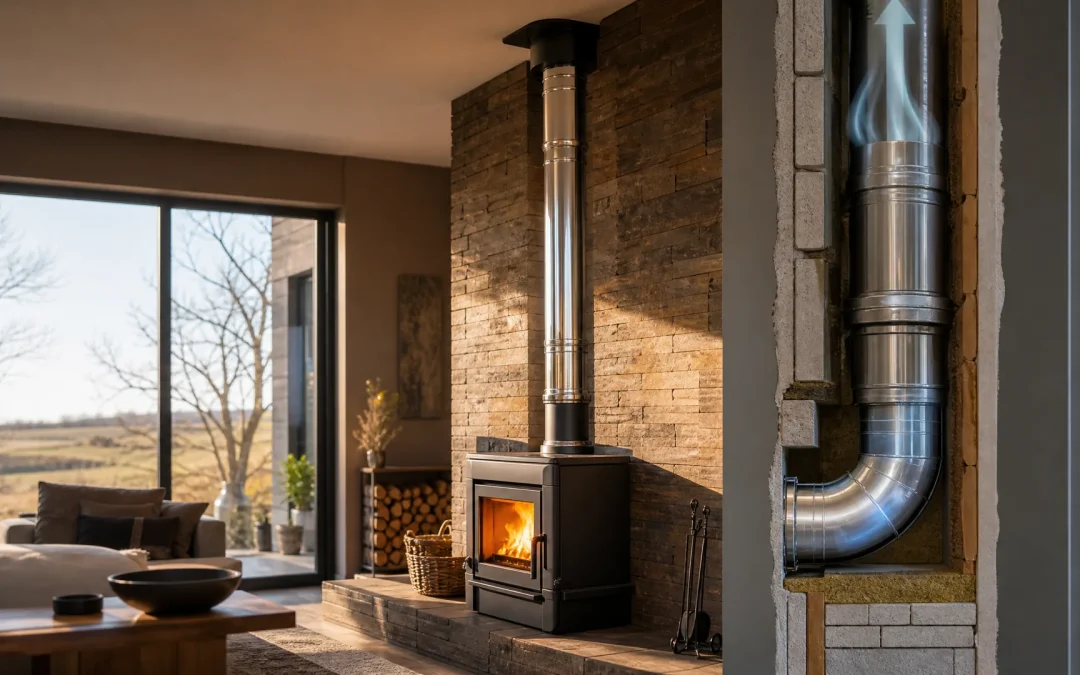
Getting a fireplace right starts long before you pick a style or a fuel type. The decision that matters most, and the one most homeowners overlook, is ventilation. Getting fireplace ventilation options clear upfront saves you from costly retrofits, compliance headaches, and genuine safety risks down the line. Whether you’re fitting a wood burner in a Highveld farmhouse or a gas fireplace in a Cape Town apartment, the venting system is what makes it work safely and efficiently.
Why Fireplace Ventilation Options Matter More Than You Think
Poor ventilation is not just an inconvenience. Carbon monoxide is colourless and odourless, and exposure in an enclosed room with a poorly vented solid-fuel appliance can reach dangerous levels within minutes, making correct venting the single most important safety decision when installing any fireplace.
Beyond safety, ventilation drives performance. A fireplace that can’t draw properly smokes into the room, deposits creosote in the flue, and loses most of its heat up the stack instead of into your living space. Good fireplace heating efficiency in the SA climate depends directly on how well the air circulation system is designed.
Ventilation is the foundation. Get it right, and everything else, heat output, air quality, running costs, follows.
Chimney vs Flue: Understanding Your Fireplace’s Exhaust System
The terms chimney and flue get used interchangeably, but they mean different things. Knowing the distinction makes it much easier to talk to installers and read product specs.
How a Traditional Masonry Chimney Works
A chimney is the full structure, the masonry or metal enclosure that rises from the firebox through the roof. Inside it runs the flue: the inner channel through which combustion gases actually travel.
Hot gases rise because they’re lighter than cooler room air. That’s the updraft, or draw. A chimney works by maintaining a consistent column of warm air from firebox to chimney pot. The taller and warmer the column, the stronger the draw. Obstructions, cold flue walls, or a poorly sized opening all reduce draw and push smoke back into the room.
Flue Pipes and Pre-Fabricated Systems
Not every installation uses a built masonry chimney. Pre-fabricated twin-wall insulated flue pipes allow a wood burner or gas insert to be vented through an exterior wall or up through a room without a traditional chimney breast. These systems carry exhaust gases out through a clear, insulated channel, but they’re faster to install and better suited to existing homes without a chimney stack.
Flue diameter is critical. A flue that’s too narrow for the firebox it serves restricts airflow, causes backdraft, and accelerates creosote build-up. A qualified installer will size the flue to the appliance’s kW output and the height of the run.
The Main Fireplace Ventilation Options for South African Homes
South African homes vary enormously, from older double-brick houses with existing chimney breasts to modern sealed apartments where running a traditional flue is impractical. Here’s how the main venting systems map onto those realities.
Direct-Vent and Balanced-Flue Fireplaces
A direct-vent (balanced-flue) gas fireplace draws combustion air from outside through a coaxial pipe and expels exhaust through the same assembly. It can be installed in a well-sealed modern home or apartment without a traditional chimney stack. The sealed combustion chamber never pulls air from inside the room, which makes it both safer and more efficient.
This is the go-to option for newer, well-insulated homes and apartments. The flue run can exit horizontally through an exterior wall, so you don’t need roof penetration. Room air circulation is unaffected by combustion because the system is completely self-contained.
Natural-Vent and B-Vent Fireplaces
B-vent (natural-vent) gas fireplaces draw combustion air from inside the room and vent exhaust vertically up a dedicated flue to the outside. They need a vertical flue run, typically through a ceiling and roof, and they do consume some room air, so they’re less efficient in sealed homes.
Open wood-burning fireplaces and freestanding log burners work on the same natural-vent principle. They rely entirely on the updraft created by the chimney or flue pipe to carry smoke and combustion gases out. These suit homes with existing chimney stacks or where a full twin-wall flue installation is feasible. For wood in particular, air supply matters, a tight room with no fresh air will starve the fire and cause smoking.
Ventless Fireplace Options: Convenience With Caveats
Ventless options have become popular in South Africa, particularly for apartments, rental properties, and rooms where running a flue simply isn’t possible. The main types are bioethanol, gel, and electric.
Bioethanol fireplaces produce water vapour and CO₂ as byproducts of combustion, which is why manufacturers cap recommended burn times and specify minimum room volumes. Run one in a small, sealed room for too long and you’ll notice condensation, stuffiness, and a drop in air quality. Ventilate the room periodically, stick to the manufacturer’s guidelines, and they’re a practical, stylish choice for open-plan living spaces.
Gel fireplaces work similarly to ethanol and carry the same room-size and ventilation caveats. They’re even more portable, with no installation required at all.
Electric fireplaces produce no combustion byproducts. There’s no real flame, no oxygen depletion, and no moisture output, just radiant or convection heat and a flame effect. For a comparison of what you gain and give up with each approach, electric versus wood-burning fireplaces covers the trade-offs in detail.
The honest caveat with all ventless options: they don’t produce the radiant heat or the authentic experience of a vented wood or gas fire. Treat them as supplementary heating or a lifestyle feature, not a primary heat source.
Fireplace Venting Requirements: SA Regulations and SANS Standards
South Africa’s building regulations don’t leave ventilation to guesswork. SANS 10400 Part T (Installations in Buildings) governs the installation of solid-fuel burning appliances, specifying minimum flue heights, clearances from combustible materials, and hearth dimensions, requirements that apply whether you’re fitting a built-in wood fireplace or a freestanding log burner.
Key requirements under SANS 10400-T include minimum flue heights above the roof line, minimum clearances between the appliance and any combustible surface, and hearth dimensions designed to contain embers safely. Gas appliances fall under additional SANS standards that regulate the gas installation itself, separate from the venting structure.
Local municipality by-laws can add requirements on top of the national standard. Some municipalities in urban areas have air quality restrictions that limit solid-fuel burning on high-pollution days. Check with your local authority before committing to a wood-burning system.
A thorough overview of fireplace safety requirements in South Africa covers the compliance landscape in more detail. The practical takeaway: always use a qualified installer who knows both SANS 10400-T and your municipality’s specific by-laws.
Choosing the Right Ventilation for Your Home and Lifestyle
The right venting system comes down to three things: your home layout, your fuel choice, and your budget.
Freestanding home with an existing chimney, a natural-vent wood burner or gas insert is straightforward. Have the chimney inspected, lined if necessary, and sized correctly for the appliance. This is the most traditional and often most cost-effective route for homes already equipped for it.
Modern sealed home or apartment, a direct-vent balanced-flue gas fireplace is almost always the right answer. It works without a chimney stack, keeps combustion air completely separate from room air, and meets compliance requirements for airtight buildings. Ventless ethanol or electric units are alternatives if even a horizontal flue run isn’t possible.
Open-plan living spaces, air circulation matters especially here, because large volumes of air mean a fireplace needs to work harder to heat the space. A direct-vent gas unit or a high-output wood burner with a properly sized flue will outperform a small ventless unit every time.
Fuel choice shapes venting fundamentally. Wood always needs a proper vented system, there’s no safe ventless wood-burning fireplace. Gas gives you the most flexibility, with direct-vent, B-vent, and (in some formats) ventless options. Electric needs no venting at all.
For design inspiration once you’ve locked in your venting approach, cosy fireplace room design ideas is a good next stop. And when you’re ready to move from planning to installation, how to install a fireplace in your home walks through the process step by step.
At Firehouse, every fireplace in our range has been hand-picked with South African homes in mind, including checking that venting solutions are practical for the typical SA house layout, where not every room has a chimney breast or external wall close enough for a flue run. Browse our best indoor fireplaces for South African homes or get in touch with our team directly. Tell us your home layout, your fuel preference, and your budget, and we’ll point you to a solution that works safely, looks great, and meets every compliance requirement your property needs.