
Cosy Fireplace Room Design Ideas: Arrange, Style, Light
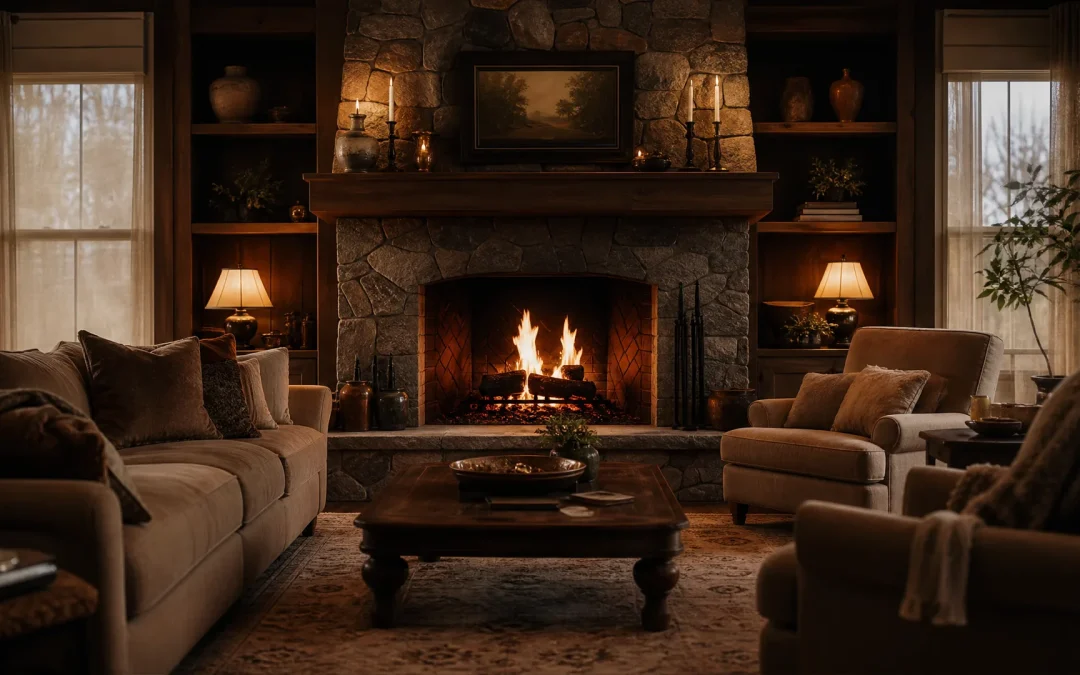
A great fireplace room doesn’t happen by accident. It starts with one decision: putting the fire first. When you build your living room around the fireplace rather than fitting it in around the sofa and TV, everything changes, the room feels intentional, warmer, and genuinely inviting. These cosy fireplace room design ideas will help you do exactly that, from furniture placement and colour choices to product selection and the finishing details that make a space feel truly special.
Why the Fireplace Should Be Your Room’s Focal Point
Most rooms have a focal point, the thing your eyes land on when you walk in. In a room with a fireplace, that competition is already over. Fire wins every time.
Interior designers consistently note that the fireplace dictates furniture placement more than any other architectural element. Get the orientation right first, then design outward. Everything else, sofas, rugs, lighting, art, should respond to where the fire lives.
When you treat the fireplace as an afterthought, you end up with a room that feels pulled in two directions. The furniture faces the TV, the fireplace sits ignored in the corner, and the whole space loses its sense of purpose. Design around the fire, and the room finds its centre.
The psychology of fire in interior design
Humans are drawn to fire. It’s not a trend, it’s wired into us. Warmth, light, and the movement of flames trigger a sense of safety and calm that no pendant light or feature wall can replicate.
That’s why rooms designed around a fireplace feel so immediately welcoming. The fire does emotional work that furniture simply can’t. Your job as a decorator is to let it do that work, and not block it.
Fireplace Focal Point Ideas: Arranging Furniture Around the Fire
Getting the furniture right is the single biggest lever you can pull. Most living rooms are arranged with sofas pushed against walls, it feels tidy, but it kills the atmosphere and creates a room that’s too wide to feel intimate.
Pull your seating inward. A sofa and two armchairs angled toward the fireplace, with a coffee table anchoring the grouping, creates a conversation zone that also faces the fire naturally. Add a large area rug underneath to define the space and signal that this is the heart of the room.
Seating layouts that draw people in
The classic layout is a sofa directly facing the fireplace with armchairs on either side, slightly angled in. This works in most standard living rooms and keeps sightlines open.
For larger rooms, consider a U-shape: sofa facing the fire, two chairs flanking it, all pulled about 2–3 metres from the hearth. Far enough to be comfortable, close enough to feel the warmth and see the flames clearly.
In double-volume South African living spaces, a freestanding wood-burning fireplace positioned slightly off-centre, rather than flush against a wall, creates a dramatic visual anchor that works from multiple angles. It invites seating to wrap around it rather than face it head-on, which adds real character.
What to avoid when placing furniture near a fireplace
One of the most common mistakes we see is homeowners placing a large sectional sofa with its back to the fireplace, prioritising the TV wall instead. Flipping the orientation, even partially, transforms the entire feel of the room. The fire becomes present again.
Other things to avoid:
- Blocking the hearth with a coffee table so large it obscures the flames from seated guests
- Placing chairs so close to the fire that they create a heat hazard or feel claustrophobic
- Ignoring the fireplace completely in open-plan layouts by burying it in a corner
Fireplace Room Decor: Colours, Textures, and Materials That Work
Fireplace room decor isn’t about matching the fire, it’s about complementing it. The colours and materials around your fireplace should feel warm and grounded, so the room reads as one cohesive environment rather than a collection of furniture that happens to share a space.
Warm palettes and natural materials
Warm, fire-adjacent colour palettes, terracotta, deep ochre, charcoal, and raw linen, have dominated South African interior trends through 2025 and continue to lead in 2026, reflecting a broader shift toward biophilic, grounded home environments. These tones work because they echo the fire’s own warmth without competing with it.
For materials, think:
- Natural stone or brick around the firebox, it’s heat-safe and adds authentic texture
- Dark or oiled timber for mantels and shelving, rimu, black wattle, or even reclaimed wood all feel right
- Linen and wool textiles for cushions, throws, and curtains, layered textures make a room feel lived-in and warm
In a South African context, raw clay plaster walls, dark timber beams, and neutral linen upholstery sit comfortably in both modern farmhouse and heritage Cape interiors. These materials don’t fight the fireplace, they let it breathe.
Avoid cool greys, high-gloss whites, and chrome accents near the hearth. They pull the eye away from the fire and make the room feel colder than it is.
Living Room Fireplace Design: Choosing the Right Fireplace for Your Home
Good living room fireplace design starts before you buy a single piece of furniture. The fireplace itself, its size, fuel type, and aesthetic, shapes every decision that follows. Choosing the right one matters enormously.
Wood-burning vs electric: what suits SA homes
This is the question we hear most often, and the honest answer is: it depends on your home, your lifestyle, and what you want from the fire.
Wood-burning fireplaces deliver real heat output, the smell of burning wood, and a visual drama that’s hard to match. They suit homes with good ventilation, outdoor wood storage, and residents who enjoy the ritual of building and maintaining a fire. In South Africa’s highveld winters, a well-sized wood burner can heat a large living room effectively. If you’re curious about the practicalities, understanding how efficiently a fireplace heats a room in the SA climate will help you size correctly before you buy.
Electric fireplaces are the practical choice for apartments, rentals, or rooms without chimney infrastructure. Modern units have come a long way, flame visuals are convincing, heat output is controllable, and installation is simple. They’re also a strong option in coastal SA homes where a full flue installation may be impractical.
For a deeper look at the trade-offs, the full breakdown of electric vs wood-burning fireplace in South Africa covers the key decision factors clearly.
Indoor fireplace inspiration for different room styles
- Contemporary minimalist rooms suit a clean-faced, wall-flush gas or electric fireplace with a simple stone or concrete surround
- Farmhouse and heritage interiors call for a cast-iron wood burner on a raised hearth with a rough-timber mantel
- Modern open-plan living areas benefit from a double-sided or see-through fireplace that works from two angles
Browsing the best indoor fireplace options for South African homes is a good starting point once you know the style direction you’re working toward.
At Firehouse, every fireplace in our range has been hand-selected by people who have lived with fire. We stock only brands we’d install in our own homes, which means you’re choosing from a shortlist of the best, not navigating an overwhelming catalogue. We also think about what’s involved in installing a fireplace early in the process, because the right unit is one that actually works in your specific space. When it comes to premium fireplace and braai brands worth investing in, we’ve already done the curation work for you.
Warm Room Design with Fireplace: Layering Light and Atmosphere
The fireplace does a lot of the heavy lifting in a cosy room, but lighting is what ties the whole atmosphere together. A warm room design with fireplace doesn’t rely on a single overhead light, it layers multiple sources at different heights to build depth.
Here’s the approach:
- Turn off the main overhead light when the fire is on. Ceiling lights flatten the room and undercut the fireplace’s visual impact
- Use warm-toned floor lamps and table lamps (2700K–3000K bulbs) to anchor the seating area with low, pooled light
- Add candles on the coffee table or hearth, even unscented pillar candles add movement and warmth
- Consider a low-hung pendant over the dining area if it’s adjacent, which draws the eye and creates a secondary warm zone
The goal is a room where the fire is the brightest light source, with everything else supporting it at a lower level. When you walk in, the fire should be what you see first.
Finishing Touches: Styling the Mantel and Hearth Like a Pro
The mantel is the frame around your fireplace focal point, and it’s easy to either over-style it or ignore it entirely. Both are a mistake.
Start with one anchor piece at the centre: a large mirror, a piece of art, or a single sculptural object. Everything else groups around it. An odd number of objects reads better than an even one, three items of varying heights create natural visual interest.
For the mantel itself:
- Lean art rather than hanging it, it looks more relaxed and is easier to swap seasonally
- Mix textures: a stone or ceramic object next to a timber element next to something organic (dried botanicals, a small branch, a woven basket) adds richness
- Keep the centre clear enough to frame the firebox, don’t let styling crowd down onto the hearth opening
For the hearth at floor level, a simple log stack to one side (for wood burners), a pair of candle holders, or a low ceramic vessel is enough. Resist the urge to fill every surface.
Seasonal refreshes keep the space feeling alive. In winter, layer in heavier textiles and swap in deeper-toned accessories. In summer, pare back to lighter objects and let the architecture speak.
The mantel is the one place in the room where small, deliberate choices make a disproportionate difference. Get it right, and the entire fireplace room design feels considered, warm, and genuinely yours.