
Best Indoor Fireplace for South African Homes: 2026 Guide
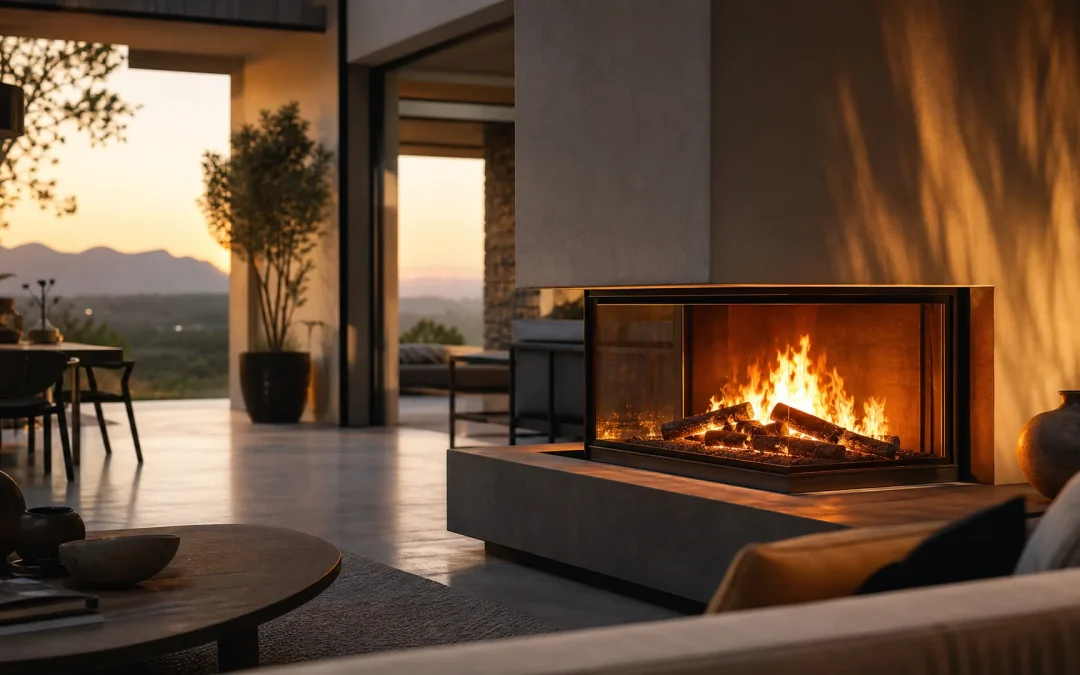
South African winters are short, but anyone who’s sat in a cold Highveld evening or a damp Cape Town living room in July knows they’re no joke. Finding the best indoor fireplace for South African homes has become a serious conversation for homeowners who want warmth that also looks the part. It’s no longer just about heating a room; it’s about creating an experience inside the home, not just at the braai.
Why Indoor Fireplaces Are Having a Moment in SA Homes
Braai culture has always kept fire central to South African living. What’s shifted is where that fire lives. Open-plan contemporary homes, double-volume ceilings, and a growing appetite for design-led interiors have pushed the fireplace indoors, and firmly into the spotlight.
Homeowners are investing in indoor fireplaces as focal points, not afterthoughts. A well-chosen fireplace anchors a living room the way a good kitchen island anchors an open-plan space. It earns its place all year round, not just on the coldest nights.
The range of indoor fireplace options available in South Africa in 2026 is better than it’s ever been. Whether you’re building, renovating, or simply upgrading a tired living room, there’s a unit sized and styled for your home.
Indoor Fireplace Options: Which Fuel Type Fits Your Home?
Not all fireplaces are the same, and fuel type is the first decision to get right. Each has trade-offs around cost, convenience, installation, and how your home actually runs day to day.
Electric Fireplace vs Gas Fireplace: The Core Trade-Offs
The electric fireplace vs gas fireplace debate comes down to installation simplicity, running costs, and, critically in South Africa, load-shedding resilience.
Electric fireplaces are the easiest to install. No flue, no gas line, no chimney. Plug in, switch on, done. They work well in apartments, smaller rooms, or rentals where structural changes aren’t possible. The catch is obvious: no power, no heat. During load-shedding, an electric fireplace is useless unless you’re running a generator or inverter system.
Gas fireplaces keep running regardless of the grid. That alone makes them a practical all-weather solution for South African homeowners who can’t rely on a stable electricity supply during winter evenings. Gas also delivers a more authentic flame, real combustion, real radiant heat, and suits larger rooms better than most electric units. Installation requires a gas supply (LPG or natural gas) and proper ventilation, so budget for a qualified installer. Running costs sit between electric and wood, depending on your gas tariff and usage pattern.
For a deeper look at how these fuel choices play out in different scenarios, see wood-fired vs gas in the South African context.
Wood-Burning Fireplaces: Classic Appeal With Caveats
Nothing beats a wood fire for atmosphere. The smell, the crackle, the radiant heat, it’s the original indoor fireplace experience. But wood-burning units come with real requirements: a properly built chimney or flue system, a dry wood supply, and the time to build and manage a fire.
In South African homes, wood fireplaces work best where there’s outdoor storage for wood, a chimney already in place, and a household that actually enjoys the ritual of it. They’re not the most convenient choice, but for many homeowners, that’s exactly the point.
How to Match a Modern Indoor Fireplace to Your Room Size
Heat output and room size need to line up, or you’ll end up with a fireplace that either struggles or overwhelms.
For smaller rooms, roughly under 25 m², a lower-output electric fireplace or a bio-ethanol unit is often the right call. These produce enough warmth for a contained space without over-engineering the installation. Bio-ethanol units in particular are sleek, ventless, and fit well into compact contemporary interiors.
Larger open-plan living areas are a different story. These spaces need real heat output to feel warm, gas or wood-burning is the stronger choice. Double-sided gas fireplaces have become a popular option in open-plan South African homes because they heat two living zones simultaneously without the installation footprint of two separate units.
Ceiling height matters too. Double-volume ceilings are beautiful but heat rises, so a higher-output unit or one with a blower fan helps push warmth back into the occupied zone. Insulation also plays a role, older South African homes with minimal ceiling insulation lose heat faster, which means you need a unit that recovers temperature quickly rather than one built for slow, sustained overnight burn.
A modern indoor fireplace chosen for the right room size will feel effortless. One that’s undersized will always disappoint, no matter how good it looks.
Top Fireplace Brands in South Africa Worth Knowing
Generic guides list specs. This section is about which brands are actually worth your money in a South African context, build quality, design credibility, and the practical matter of parts and service support when you need it.
Morso (Danish) is one of the most respected names in premium wood-burning fireplaces worldwide. Their cast-iron construction and clean Scandinavian design translate well into contemporary South African interiors. Morso units are built to last decades, and local stockists can support parts and service.
Stûv (Belgian) takes a more architectural approach. Their fireplaces, many of them double-sided or see-through designs, are made for open-plan, design-led homes, which are increasingly common in South Africa’s urban residential market. If your priority is visual drama alongside real performance, Stûv is worth a close look.
Napoleon (Canadian) brings engineering depth and a wide product range, covering gas, wood, and electric fireplaces. Their gas inserts and built-in gas units are particularly well-regarded, and the brand has strong distribution and service infrastructure in South Africa. For homeowners who want a reliable gas fireplace with proven cold-climate performance, Napoleon is a consistent recommendation.
These aren’t the only fireplace brands in South Africa, but they represent the upper tier, units that earn their price through quality, longevity, and design integrity.
SA Climate and Aesthetic: What Most Guides Miss
Here’s what most generic fireplace guides don’t account for: South African winters are relatively short and mild compared to European climates. That changes what you actually need from a fireplace.
In Scandinavia or Canada, a fireplace needs to sustain heat over long, dark winters. In South Africa, you’re more likely using it on cool evenings from May to August. Quick heat-up time and visual impact matter just as much as raw heat output. A fireplace that takes 45 minutes to warm a room is less useful here than one that makes a difference in 10 minutes.
Low maintenance matters too. A unit that demands regular cleaning, specialist servicing, or hard-to-source fuel isn’t a good fit for the intermittent, lifestyle-led way South Africans typically use indoor fireplaces.
On the aesthetic side, the design direction in contemporary South African homes, open-plan layouts, clean lines, plastered or tiled finishes, calls for slim, architectural fireplace designs. Bulky traditional surrounds look out of place. Slimline gas inserts, frameless wall-mounted units, and double-sided fireplaces that float between rooms fit the local aesthetic far better.
This is also why the modern indoor fireplace is as much a design centrepiece as a heat source. Choosing purely on BTU output misses the point.
How to Get the Right Fireplace for Your Home With Firehouse
Firehouse has been sourcing and hand-picking premium fireplaces for South African homes since 2018, close to a decade of on-the-ground experience with what works in local climates and builds. That experience shapes every recommendation they make.
The process isn’t just about browsing a catalogue. It starts with understanding your home, room size, ceiling height, existing infrastructure, and what you actually want the fireplace to do. From there, the team narrows the options to what genuinely fits, rather than pushing whatever’s in stock.
Once you’ve chosen a unit, Firehouse guides you through our complete SA fireplace installation guide and connects you with qualified installers who know the product. It’s a curated, end-to-end approach, not a checkout page.
If you’re ready to find the best indoor fireplace for your South African home, the simplest next step is to reach out to the Firehouse team directly. Tell them your room, your style, your situation, and let the expertise do the work.