
Gas Braais for Sale in South Africa: What to Look For
Shopping for a gas braai in South Africa usually means scrolling through page after page of marketplace listings, sorted by price, with no real explanation of what makes one unit better than another. That’s a problem. A gas braai is a long-term investment in your outdoor space. Get it right and you’ve got years of easy weeknight grilling and weekend entertaining. Get it wrong and you’re replacing a rusted-out burner within two years.
This guide skips the generic listing approach. Instead, it covers what actually matters when you’re looking at a gas braai for sale in South Africa: burner quality, build materials, gas type, brand reputation, and what a fair price actually looks like.
What to look for before buying a gas braai in South Africa
Before you get swept up in features and finishes, focus on the parts that decide whether your braai lasts five years or fifteen.
Burner material. This is the single most important factor. A stainless steel burner resists corrosion. It will outlast a painted mild-steel one exposed to coastal air or summer rainstorms. Installers who work on these units day in and day out will tell you that the biggest predictor of a gas braai’s lifespan isn’t the brand name on the lid. It’s the gauge and grade of the burner and firebox steel underneath it.
Firebox and body construction. Look for thicker-gauge stainless steel or cast aluminium bodies over thin, lightweight sheet metal. A heavier build holds heat better and resists warping.
Gas type and connections. Most South African households run gas braais off standard LPG gas bottles, typically 9kg. Check that the regulator and hose are SABS-approved. If you’re upgrading rather than starting from scratch, confirm the connection type matches what you already have.
Ignition system. Piezo ignition is the standard, and it’s generally reliable. If you’re buying online, check reviews for how the ignition holds up over a few seasons. This is a common early failure point on cheaper models.
Warranty terms, read the fine print. Many South African buyers only discover their gas braai’s warranty excludes burner corrosion when they need a replacement part two years in. A genuine warranty should spell out exactly what’s covered on the burner, not just the body or the trolley.
Heat output and cooking area. More burners mean better temperature zoning, which matters if you regularly cook for a crowd. A single-burner unit is fine for a couple. A family that entertains often will want at least two or three.
If you’re still weighing gas against charcoal for your own setup, it’s worth reading a gas braai vs charcoal braai comparison before you commit to fuel type.
Freestanding vs built-in gas braai: which one is right for you?
This is one of the first decisions you’ll make, and it shapes everything from price to installation.
A freestanding gas braai sits on its own trolley or stand. You can move it around your patio or bring it along on visits to family. It’s the more flexible option, and it’s usually the faster route to get cooking, since there’s no permanent plumbing or building work involved.
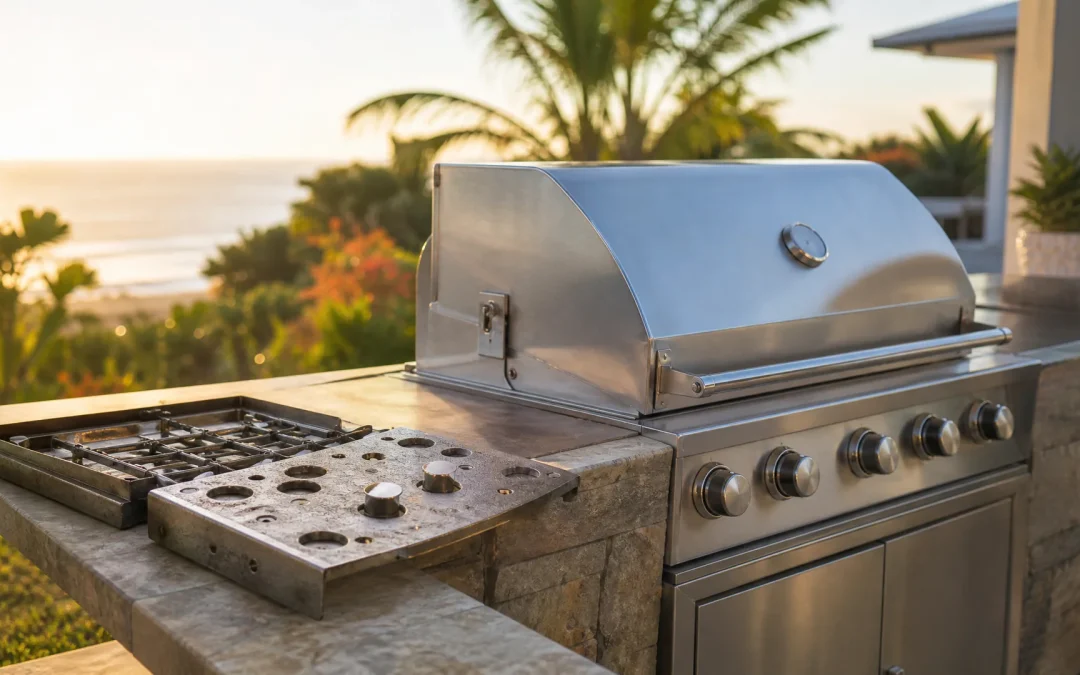
A built-in gas braai is installed into a fixed structure, often as part of an outdoor kitchen or entertainment area. It looks more polished and tends to suit homeowners doing a proper braai area renovation. The trade-off is a bigger upfront project. You’ll need a gas line run to the unit, and in many cases a qualified installer.
If you’re renting, moving in the next few years, or just want something you can reposition, freestanding wins. If you’re building a permanent outdoor kitchen and want that fitted, seamless look, built-in is worth the extra planning. A freestanding braai buyer’s guide goes into more depth on choosing between trolley styles and sizes. For those leaning toward the permanent route, it also helps to know where to buy a built-in braai from a supplier who understands the installation side, not just the retail side.
Which gas braai brands are considered the best in South Africa?
Brand matters, but not in the way most listing sites imply. A well-known name on a poorly built unit is still a poorly built unit. What actually separates the better gas braai brands sold in South Africa is consistency in steel grade, burner quality, and after-sales support.
Every braai in Firehouse’s range is hand-picked by people who install and service these units day to day, not chosen by price alone. The brands on offer have already been tested against South African conditions: coastal humidity, dust, and the kind of heavy weekend use that separates a good unit from a mediocre one.
When you’re comparing brands yourself, look past the marketing copy and check three things: what the burner is made of, what the warranty actually covers, and whether spare parts are easy to source locally. A brand that ticks all three will usually cost more upfront. It’ll cost you far less over a five-year ownership period than a bargain import that needs a new burner in year two.
For a closer look at which names consistently perform well for bigger households, a piece on best braai brands for family entertaining breaks down brand choice by household size and use case. And if you want the fuller argument for why paying more upfront often saves money over time, there’s a dedicated read on premium braai brands worth the investment.
Gas braai prices in South Africa: what should you expect to pay?
Gas braai prices in South Africa vary widely. That range is exactly why price-sorted marketplace listings are a poor way to shop. A basic single-burner freestanding unit sits at the lower end. Multi-burner freestanding models with better steel and a side burner cost more. Built-in units, once you factor in the unit itself plus installation, sit at the higher end of the spectrum.
The mistake most first-time buyers make is comparing sticker price without factoring in burner quality or warranty coverage. A cheaper unit that needs a new burner within two years often ends up more expensive than a slightly pricier one that lasts a decade.
If you want a clearer sense of what a realistic budget looks like for your household size and how you plan to use the braai, it’s worth reading through how much you should spend on a braai before you start comparing individual listings.
Is a gas braai with a side burner worth the extra cost?
A side burner adds a small, standalone gas ring next to the main grilling surface, usually used for sauces, sides, or a pot of pap while the meat cooks on the main grid.
For anyone who regularly entertains or cooks full meals outdoors rather than just grilling meat, a side burner earns its keep quickly. It frees up the main cooking surface and cuts down on trips back to the kitchen.
If you mostly do quick weeknight grilling for one or two people, it’s a nice-to-have rather than essential. You could put that budget toward a better-built main unit instead. It comes down to how you actually braai, not how impressive the spec sheet looks.
Where is the safest place to buy a gas braai online in South Africa?
Buying a gas braai online in South Africa comes with a few extra considerations beyond a normal online purchase, mostly because of gas safety and after-sales support.
Look for a seller that can answer real technical questions about burner steel, regulator compatibility, and warranty terms, rather than one that just lists specs copied from a manufacturer sheet. A seller who also installs and services these units is in a much better position to help if something goes wrong down the line.
Check for a physical presence or contactable team in South Africa, clear warranty documentation, and confirmation that the unit meets local gas safety standards. Avoid listings with vague or missing information on burner material. That’s usually where corners get cut.
This is exactly the gap Firehouse aims to close: a curated range chosen by people who actually work on these braais, backed by guidance you can ask for directly, rather than a marketplace page sorted by whoever paid for the top listing.
Does a gas braai need professional installation?
It depends on the type. A freestanding gas braai generally doesn’t need professional installation. You connect it to a standard LPG gas bottle, check the connections, and you’re ready to cook.
A built-in gas braai is a different story. Because it’s plumbed into a fixed gas line, it typically requires a qualified gas installer to fit it correctly and safely. Don’t skip this step or try to DIY it. A poor gas connection is a genuine safety risk, not just an inconvenience.
For a full rundown of what’s required and what to check before signing off on the work, gas braai installation safety requirements covers the process in detail. Once your braai is installed and in regular use, keeping the burner and grids clean also extends its life considerably. That’s a topic covered in how to clean a gas braai.
Buy with confidence, not just on price
A gas braai is one of those purchases where the cheapest option upfront rarely turns out to be the cheapest option overall. Burner quality, steel grade, and warranty terms matter far more than a low price tag on a marketplace listing.
Firehouse’s range has been chosen by people who install and service these units, not just sell them. If you’re ready to look at a curated range of freestanding and built-in gas braais, browse what’s currently in stock, or get in touch with the team for advice on which model suits your space and budget. A quick conversation before you buy can save you years of frustration, and a fair bit of money, down the line.