
When to Replace Your Braai: A Complete Guide
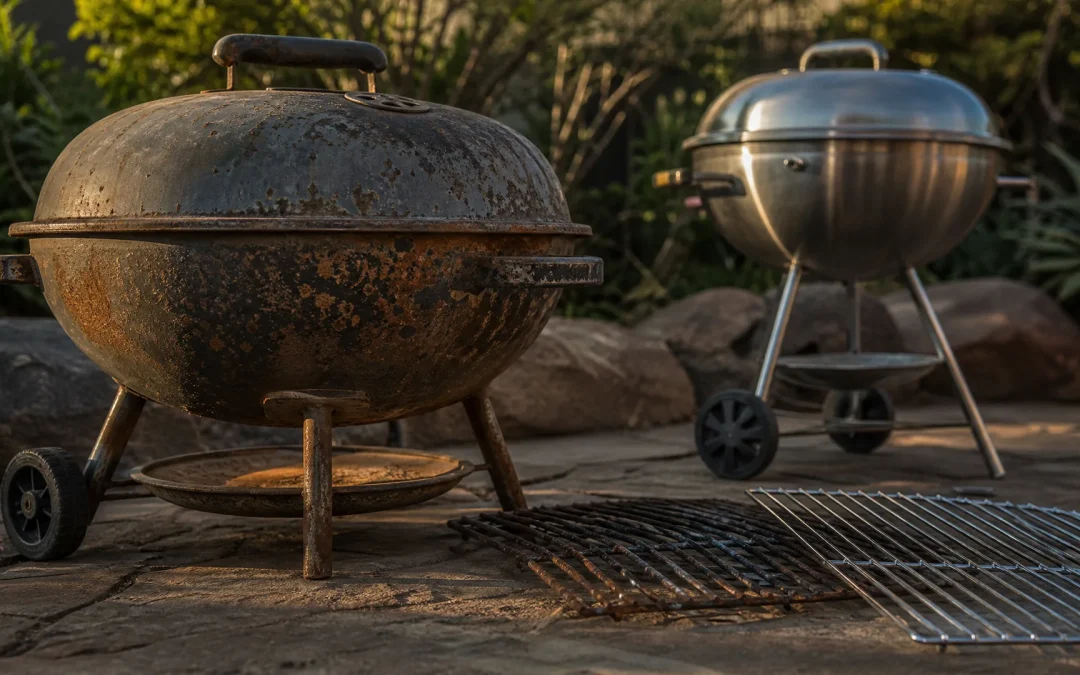
Your braai has been through a lot, late summer evenings, family gatherings, the occasional overloaded grid. At some point, though, every braai reaches the end of its useful life. The trick is knowing when that point has arrived, and whether you’re better off repairing, replacing, or simply upgrading. This guide on when to replace your braai walks you through the honest answers, so you can make a confident, well-informed decision.
How Long Should a Braai Last?
Braai lifespan by type and material
A braai’s lifespan depends heavily on what it’s made of and how it’s built. Here’s a realistic breakdown:
- Entry-level kettle braais (thin mild steel, basic powder coat): 3–5 years with regular use before rust and warping become serious problems.
- Mid-range gas and charcoal braais (thicker steel, porcelain enamel or basic stainless): 5–10 years, depending on care.
- Premium cast iron or 304-grade stainless steel braais: 15–25 years or more when maintained properly. South African braai specialists treat cast iron and stainless steel as the benchmark for longevity, units built to commercial-grade tolerances routinely outlast budget alternatives by many years.
- Built-in or masonry braais: With quality construction and proper sealing, these can last decades. The weak points are usually the grate and firebox lining, not the structure itself.
Material matters more than almost any other factor. Mild steel rusts from the inside out. Stainless steel and cast iron resist heat stress far better and shrug off the surface oxidation that eats through cheaper units.
How your braai habits affect longevity
A braai used twice a week ages differently from one that comes out six times a year. Frequent use accelerates wear on grates, burners, and the firebox, but a well-maintained, frequently used braai often outlasts a neglected one that sits uncovered for months between uses.
Coastal homeowners, in Cape Town, Durban, and along the Garden Route, face accelerated corrosion from salt-laden air. This can cut the lifespan of a mild steel unit in half. In those regions, stainless steel or powder-coated units aren’t a luxury; they’re a practical necessity.
Maintenance habits also shift the timeline dramatically. A braai that’s covered, cleaned after each use, and inspected annually will comfortably outlast the same model left exposed to the elements.
Clear Signs It’s Time to Replace Your Braai
Structural and safety red flags
Cosmetic wear, surface rust patches, faded paint, a scratched lid, is normal and nothing to worry about. Structural failure is a different matter.
These are non-negotiable replacement triggers:
- Rust that has eaten through the body or firebox wall. Surface rust can be treated. Through-rust means the structural integrity is gone.
- A cracked firebox. Heat will continue to stress and widen the crack. A cracked firebox is a fire safety risk, not a cosmetic issue.
- Gas burners that no longer ignite consistently or burn unevenly. A burner failing to ignite reliably is a serious safety concern. Experienced braai technicians treat this as a signal that the unit has reached the end of its safe service life.
- An unstable base or frame. A wobbly braai that shifts under load is a burn hazard, full stop.
- Severely warped cooking grates that can’t hold food level or create dangerous hot spots.
If you’re seeing any of the above, braai grate rust prevention tips can help you assess whether surface damage has progressed to structural failure.
Performance warning signs
Sometimes the braai looks fine but cooks badly. Watch for:
- Uneven heat distribution that no amount of repositioning fixes.
- Gas pressure that fluctuates without an obvious regulator issue.
- Charcoal braais that struggle to reach and hold temperature despite a good fire.
- Lids or vents that no longer seal or adjust properly, making heat control impossible.
Poor performance costs you more than frustration, it costs you fuel, food, and the enjoyment of the braai itself.
Braai Repair vs Replace: How to Make the Call
The honest rule used by experienced braai professionals is this: if a repair bill is approaching 40–50% of the cost of a quality replacement, the money is almost always better spent on a new unit, especially if the existing braai is already more than five years old.
Repairs make sense when:
- The braai is premium-grade and relatively young.
- The fault is isolated (a single burner, a worn seal, a grate swap).
- Replacement parts are readily available from the manufacturer.
Replacement makes sense when:
- The same fault keeps recurring after repairs.
- Multiple components are failing at the same time.
- The repair cost clears that 40–50% threshold.
- The braai has structural rust or a cracked firebox, problems that can’t be meaningfully fixed.
Sentimental value is real, and there’s nothing wrong with acknowledging it. But a braai that’s unsafe or can’t cook properly isn’t doing you any favours, and South African braai culture is too good to be wasted on a unit that’s fighting you every Saturday.
When to Buy a New Braai: Life Moments That Trigger an Upgrade
Not every braai replacement is driven by failure. Some of the best upgrades happen when life changes around the braai, not because the braai broke down.
Common upgrade triggers include:
- Moving to a new home. A new garden, a new entertaining space, and a fresh start make this the natural moment to reassess your setup.
- Renovating or expanding your outdoor area. If you’re redesigning your garden, a bigger or built-in braai often becomes part of the plan. Outdoor entertaining space ideas can help you think through the full picture.
- Switching fuel type. Many braai enthusiasts start on charcoal and eventually want gas for convenience, or the reverse, returning to wood-fire for flavour. A fuel switch almost always means a new unit.
- Outgrowing your current size. The family grows, the social circle expands, and suddenly a 47 cm kettle braai is consistently overloaded.
- Stepping up your cooking ambitions. A rotisserie, a smoker, a dual-zone gas setup, when you want to cook differently, you often need different equipment.
These are lifestyle decisions, not reluctant ones. An upgrade is an investment in more enjoyment, not just a replacement of something broken.
Choosing the Right Replacement Braai
Premium braai brands worth knowing
When you’re ready to buy, the brand and build quality you choose now determine how long you’ll go before having this conversation again. Premium braai brands worth the investment tend to share a few common traits: heavy-gauge materials, quality burner assemblies, solid warranties, and parts availability that lasts years past purchase.
At Firehouse, every braai in our range is hand-picked by industry insiders. Customers get a pre-filtered selection that has already passed a durability and quality bar most general retailers never apply. You’re not scrolling through hundreds of options hoping to make the right call; you’re choosing from a shortlist that’s already been vetted.
Key factors to evaluate:
- Fuel type: Gas for convenience and temperature control; wood or charcoal for flavour and tradition. Wood-fired vs gas braai, which suits you is worth reading before you commit.
- Material: 304-grade stainless steel or cast iron for longevity; avoid thin mild steel if you’re near the coast.
- Warranty: A genuine multi-year warranty signals manufacturer confidence in the build.
- Parts availability: Can you get a replacement burner or grate in three years? With premium brands, the answer is usually yes.
Matching the braai to your space and style
A braai that’s too big for your patio overwhelms the space; one that’s too small for your group frustrates every guest. Choosing the right braai size for your garden helps you match capacity to real-world use rather than guesswork.
Think also about how the braai fits your outdoor aesthetic. A built-in masonry braai suits a permanently designed entertaining area. A freestanding gas unit suits flexibility and rental properties. A premium kettle braai sits well in a medium-sized garden and still produces exceptional results.
Making Your Next Braai Last: Braai Durability Tips
The best time to start protecting your new braai is the day it arrives. These habits make a measurable difference:
- Cover it every time. A good-quality cover keeps moisture and salt air off the surfaces between uses. This is the single highest-leverage habit for longevity.
- Clean after every braai. Grease and food residue trap moisture against metal surfaces and accelerate rust. A quick brush-down while the grate is still warm takes two minutes.
- Oil your grates regularly. A light coat of high-smoke-point oil after cleaning creates a barrier against oxidation.
- Inspect annually. Check burner connections on gas units, look for early rust spots on welds and seams, and tighten any loose fittings before they become bigger problems.
- Store properly in off-season. If you braai less in winter, consider bringing cast iron components indoors or under shelter during prolonged wet weather.
For a deeper dive into routine care, how to keep your braai clean and rust-free covers the full process in practical detail.
The braai culture in South Africa is built around sharing, good food, good fire, good company. A well-chosen, well-maintained braai supports all of that for years. If you’re at the point of making a replacement decision and want a trusted second opinion, the Firehouse team is here to help you find the right unit for your space, your style, and how you braai. Get in touch, we know these products inside out, and we’ll point you straight to what works.