
Built-In Braai Spit Motors South Africa: Which to Buy
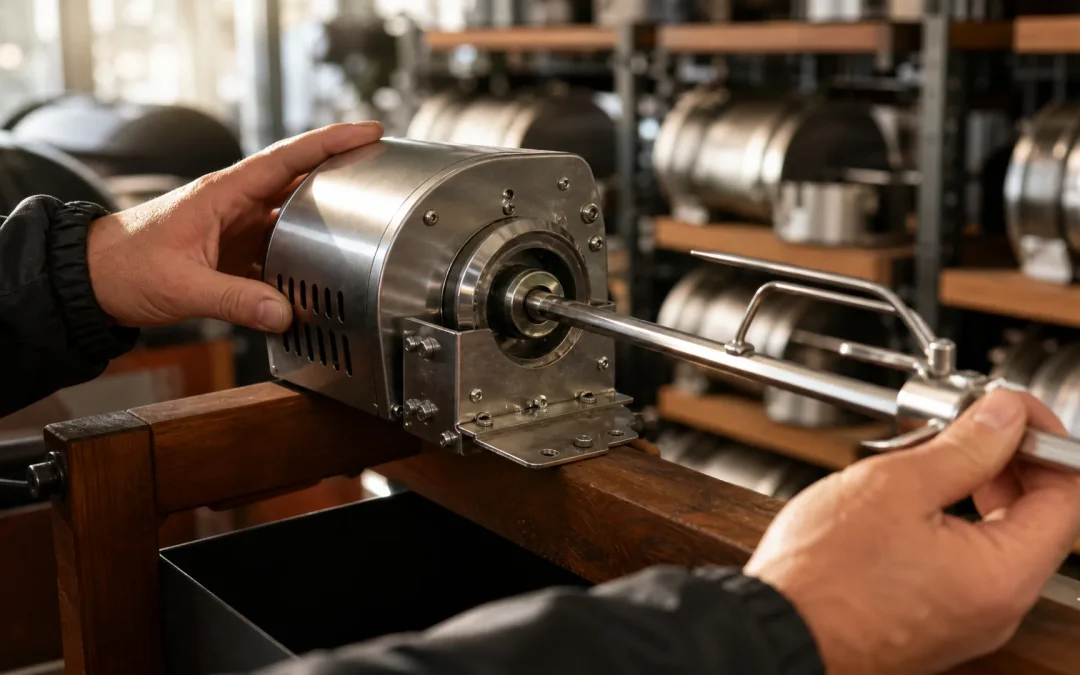
Searching for a built-in braai spit motor for sale in South Africa usually lands you on the same bare hardware-store page. Rows of motors, a price, maybe a wattage figure, and nothing else. No mention of load capacity, no advice on matching the motor to your spit, no sense of whether it will survive a whole lamb on a Saturday afternoon. That gap is why so many people buy the wrong motor first time round.
Why a Generic Spit Motor Off the Shelf Often Disappoints
A spit motor looks simple from the outside. It’s a small unit that turns a skewer. But the difference between a motor that lasts five years and one that burns out in a season comes down to details most listings skip entirely.
Torque, load rating, mounting style, and speed control all matter. Get any one wrong and you end up with a motor that strains under a heavy roast, or one that doesn’t fit the bracket on your built-in braai.
What hardware-store listings don’t tell you
Most generic listings give you a brand name, a price, and a photo. They rarely specify the maximum kilogram load the motor can handle. They almost never say whether it suits a fixed built-in setup or a portable stand.
That leaves you guessing. Firehouse’s team hand-picks and tests every spit motor in its range for torque and load capacity before listing it, instead of reselling whatever a supplier catalogue offers. That’s the difference between a curated recommendation and a random pick off a shelf.
How to Choose a Spit Motor for Your Built-In Braai
Choosing a spit motor isn’t complicated once you know what to check. It comes down to three things: how much weight it needs to turn, how long your skewer is, and how it mounts to your existing braai structure.
Get these right and the motor runs quietly and evenly for years. Get them wrong and you’ll be replacing it long before you planned to.
Spit motor load capacity explained
Load capacity is the single most important spec on any spit motor. It tells you the maximum weight the motor can rotate without straining.
Most household-grade spit motors are rated for loads between roughly 20kg and 40kg. Matching that rating to your typical cut of meat is the biggest factor in how long the motor lasts. A chicken or a small leg of lamb sits comfortably at the lower end. A whole lamb, a full pork leg, or a large stuffed roast pushes toward the top of that range, and sometimes past it.
Always check the stated load rating before you buy. Round up rather than down if you’re unsure what you’ll typically cook.
Matching motor size to your braai’s spit and skewer
Load capacity isn’t the only fit issue. The motor also needs to match your spit rod’s diameter and your braai’s mounting bracket.
Built-in braais vary in bracket height, spit length, and rod thickness depending on who built them and when. Before buying, measure your existing skewer’s diameter and the distance between your braai’s mounting points. If you’re still finalising the structure itself, it’s worth looking at built-in braai spit and rotisserie kits designed to work together from the start, rather than retrofitting mismatched parts later.
Battery vs Electric Braai Spit Motor: Which Suits You
This is one of the most common questions people ask when shopping for a rotisserie motor for a built-in braai. The answer depends largely on where your braai sits and how you use it.
A battery-powered spit motor is handy for a stand-alone or portable braai away from a plug point. But most built-in braai setups near the house are better served by a mains electric motor, which gives consistent torque over long cook times. Battery motors are lightweight and convenient for camping or a garden gathering far from an outlet. Their torque tends to drop as the battery drains, though, and that shows up as slower or uneven rotation partway through a long roast.
Electric motors, by contrast, deliver steady power for as long as they’re plugged in. For a built-in braai next to your patio or kitchen, that reliability usually wins out, especially for longer cooks like a whole lamb that can take several hours.
If you’re still deciding between a fixed setup and something more mobile, a portable vs built-in braai comparison can help you settle that question before you commit to a motor type.
Best Spit Motor for a Whole Lamb or Large Roast
Roasting a whole lamb or a large leg of pork puts real demand on a spit motor. This is where load capacity and torque matter far more than they do for a chicken or a small roast.
A whole lamb or full leg of pork on a built-in spit can weigh well over 15kg once you add the skewer and counterweights. That’s why an underpowered motor labours, stalls, or wears out within a season. The motor has to keep turning that weight evenly for hours, often against uneven distribution as the meat cooks and shifts on the rod.
For big cuts, look for a motor at the higher end of the household load range, ideally one with a counterweight system or adjustable bracket to help balance the load. Braai builders generally agree that motor speed control matters as much as raw power. A slow, even rotation bastes meat properly, while a motor that only runs at one fast speed can dry out a roast. A variable-speed motor with strong torque is worth the extra spend if whole-animal roasts are a regular feature of your braai calendar.
Built-In Braai Spit Motor for Sale in South Africa: What Firehouse Recommends
Once you know your load needs and power preference, the actual buying decision gets much easier. Firehouse builds its range around motors already tested for torque, load capacity, and fit with common built-in braai brackets, so you’re not left guessing from a spec sheet alone.
Rather than browsing a generic grid, you’re choosing from options checked against the real demands of South African braai culture: long cook times, heavier cuts, and outdoor conditions. That’s the kind of guidance the bare hardware-store listings simply don’t offer.
Rotisserie accessories that complete the setup
A motor rarely works alone. Counterweights help balance an uneven cut of meat. A sturdy skewer and secure prongs keep the load centred on the rod. Extra brackets or mounting plates may be needed if your built-in braai wasn’t originally designed with a spit in mind.
Firehouse picks its braai rotisserie accessories in South Africa to work together, so you’re not left hunting for a compatible part after the fact. If you’re still shopping for the braai itself, built-in braai kits for sale or a broader look at where to buy a built-in braai in South Africa are good starting points before you add rotisserie accessories on top. And if you’d rather invest once in gear built to last, it’s worth browsing premium braai brands worth investing in alongside your motor choice.
Installing and Maintaining Your Spit Motor
Fitting a spit motor to an existing built-in braai is usually straightforward if the bracket and rod dimensions match. Most motors bolt or clamp onto a mounting bracket at the side of the braai, with the spit rod running through the motor’s drive socket.
Check that the bracket sits at a height and distance that lets the rod turn freely above your coals, without the meat dragging on the grid or the firebox wall. If your braai wasn’t built with a spit mount in mind, you may need an additional bracket kit rather than forcing an ill-fitting motor into place.
Once installed, a little care keeps it running well. Wipe down the motor housing after use, keep the drive socket free of grease and ash, and store it under cover or bring it inside during South Africa’s wetter months. For broader upkeep advice on the rest of your setup, braai maintenance and cleaning tips covers the habits that keep a built-in braai performing well for years.
Choose the right motor from the start, look after it, and you’ll get fewer surprises and more evenings where the only thing turning heads is the roast on your spit. If you’re ready to stop guessing and start cooking, Firehouse’s tested range of built-in braai spit motors is the place to begin.