
How to Choose a Pizza Oven for Your Home: A Buyer’s Guide
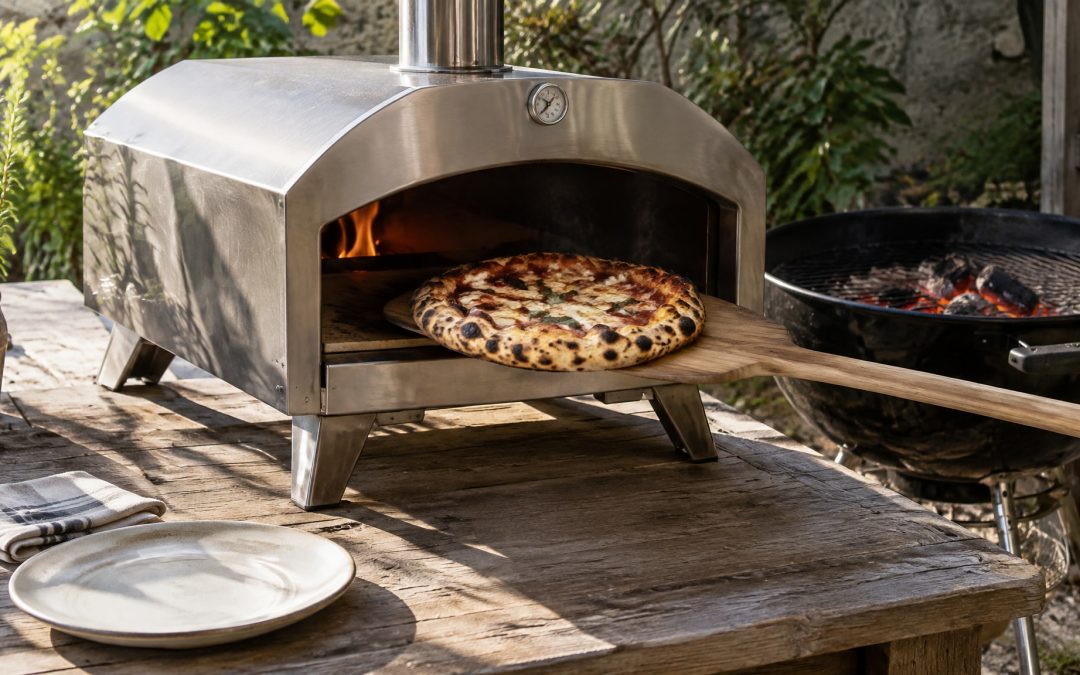
Picture the braai glowing at one end of the patio, friends drifting between the drinks table and the kitchen door, and a pizza coming out of the oven blistered and bubbling just as someone announces they’re hungry again. That’s the evening a good pizza oven gives you.
Knowing how to choose a pizza oven for your home comes down to three decisions: the fuel, the size and the spot. We’ve kept product names out of the first half of this guide on purpose. Firehouse’s range is hand-picked by people who know braais and fire well, so what follows draws on hands-on knowledge, not just spec sheets.
Start With the Pizza Nights You Want
Before you look at a single oven, think about how you’ll really use it. Three quick answers will steer every choice that follows.
First, how often you’ll cook. An oven that comes out twice a year for birthdays suits a different cook than one fired up every Friday. Second, the biggest group you’ll feed, because that number decides the size. Third, who’ll be doing the cooking: you, a partner who loves a bit of theatre, or whoever happens to be standing closest.
Write the three answers down. They’ll save you from buying an oven that looks wonderful but doesn’t fit the way your family entertains.
If you’re also thinking about a fireplace for the lounge, the same fit-first thinking runs through our guide to choosing a fireplace.
Choosing the Best Pizza Oven Fuel Type
There’s no single best pizza oven fuel type. There’s only the one that suits how you cook, and the trade-offs are easier to see side by side.
Wood-Fired vs Gas Pizza Oven: The Real Trade-Off
A wood-fired oven gives you flavour and theatre. The smoke leaves a subtle smokiness in the crust, and the fire itself drives the heat. The Casa Nostra Pepe wood-fired oven is described in exactly those terms, and it’s the clearest reference point in our range for this side of the choice.
That flavour has a price in attention. Wood needs a flue route so the smoke has somewhere safe to go, and someone has to build the fire, feed it and watch it. If you braai most weekends, you probably enjoy that. It’s the same pleasure as tending coals.
Gas goes the other way. It heats quickly, holds steady and asks far less of the cook, which makes it a good fit if you want pizza on a weeknight without the ritual of lighting a fire. You give up some of the smoke character in return, and you need a safely ventilated gas supply. Gas braai owners will recognise the questions, and what to look for in a gas braai overlaps neatly with what you’d check on a gas pizza oven.
Here’s a rough rule. If the fire is half the fun for you, lean towards wood. If you want a reliable result with minimal fuss, lean towards gas.
Neither is right for everyone. A wood-fired oven is not for the cook who wants to be eating twenty minutes after deciding to make pizza.
Electric: Easy to Live With, if Your Power Is Reliable
Electric is the simplest to site. There’s no flue, no gas bottle and no fire to manage, so it suits a tight patio or a spot close to the house.
The catch is the supply. An electric oven is only as dependable as your power, and with load-shedding still a fact of life in many South African homes, a pizza night can end abruptly mid-bake. If you have a backup or a very stable supply, electric is a pleasant, low-effort choice. If not, think twice.
Pizza Oven Size Guide: Matching the Oven to Your Pizza Nights
Size is where most buyers go wrong, usually by sizing for a quiet Tuesday instead of the Saturday when everyone arrives at once. Start from your biggest realistic night and work back.
How Many Pizzas Your Oven Should Handle in One Session
Pizzas cook quickly, so the real bottleneck is how many go in at once. If the oven takes one pizza at a time, a table of eight guests spends the evening watching the cook and waiting for a turn.
Count your largest regular gathering, then check how many pizzas the oven handles in one go. Guests shouldn’t be left queuing while the first few people finish eating.
A smaller oven is perfectly fine if you usually feed a family of four and the odd extra couple. You don’t need to buy for the once-a-year party, because a bigger oven also takes more fuel, more space and more time to bring up to heat. Be honest about how often the big night really happens.
Cooking Floor vs Outside Footprint: Read the Specs Carefully
The cooking floor is the part that holds the pizza. The outside footprint is the whole unit, including the insulation, the casing and any flue, and it’s always noticeably bigger.
So a pizza oven that sounds compact can still take up more of your patio than you expect. Measure the space for the entire oven, then add room for a prep table, a pizza paddle and space to move around it with a hot, loaded paddle in your hands.
Tape the outline onto the ground or the patio before you buy. It takes five minutes and shows you at once whether the oven leaves room for people.
Outdoor Pizza Oven Installation in South African Gardens and Patios
Outdoor pizza oven installation is simpler than most people fear, as long as you plan it before the oven arrives. The manufacturer’s manual always has the final word, and nothing in this guide replaces it.
Picking the Spot: Level Ground, Clearances and Shelter
Start with the ground. It needs to be level, non-combustible and strong enough to carry the weight of the oven, plus a table or stand if there is one. Paving or a proper slab works. Timber decking and bare lawn do not.
Then look up and around. Follow the manufacturer’s clearances from walls, overhangs, seating and the braai, and don’t squeeze them to make things fit.
Shelter matters more than people expect. Wind can cool the oven or push smoke straight at your guests, and rain is a problem for the oven and the cook. An open lawn exposes an oven to the elements in a way a covered patio doesn’t, so the same oven can belong in very different spots in two gardens. Notice where the wind comes from on a typical evening before you commit.
Freestanding, Built-In or Portable: Choose the Setup First
Each setup trades flexibility for permanence.
- Portable ovens can move to wherever the party is, or be packed away. They need a sturdy, heat-safe surface every time you use them.
- Freestanding ovens sit on their own stand or table. They’re easy to reposition, but still need a proper home with the right clearances.
- Built-In ovens become part of the garden. They look wonderful and suit a long-term plan, but they need the most preparation: foundations, a flue route for wood and a decision about everything around them. Built-in braai setups follow the same planning logic.
Each fuel adds its own needs at installation. Wood needs a flue route, gas needs a safely ventilated supply and electric needs a dependable plug point within reach.
If you live in an estate or sectional title scheme, check the rules on outdoor cooking with your body corporate or HOA first. Some restrict open fires or flues, and it’s better to find out before you buy.
Fitting the Pizza Oven Into Your Braai Area
Plan the braai, the pizza oven, the prep counter and the seating as one flow. The aim is for the cook to move between them without crossing guests or standing in smoke.
Keep both cooking zones within easy reach of fuel storage and prep space, because you’ll be fetching wood, dough and toppings all evening. Then give them enough distance that neither fire crowds the other. A braai needs elbow room, and so does a hot pizza oven.
Seating comes last, and it should sit upwind of both fires where you can manage it. Guests like to watch the action, but nobody wants a faceful of smoke with their sundowner.
If you’re adding to an existing braai area, stand where you’d cook and walk through a full evening in your head, from lighting to serving. Any spot where you’d have to squeeze past someone is a spot to rethink.
Three Pizza Ovens From Our Range
Once you’ve settled fuel, size and spot, here are the three pizza ovens we stock, each matched to a type of cook using only what’s in their product details. Check each product page for the full specification.
The wood-fired purist. The Casa Nostra Pepe wood-fired oven is described as a wood-fired oven, with the smoke giving the crust a subtle smokiness. If you love tending a fire and want that depth of flavour, this is the one to look at.
The cook who likes to watch the bake. The Jetmaster Bella Forno stainless steel pizza oven has a stainless-steel front and a durable mild steel body. Ceramic insulation, a built-in temperature gauge and a 410mm x 155mm glass window let you judge both the heat and the bake without opening the door. It suits a careful cook who likes to be in control. Check the product page for how it’s fuelled before you plan your install.
The planner who wants the setup sorted. The AL FRESCO GRANDE pizza oven comes as the oven only or as an oven with stand and table, so the installation question is answered at the point of purchase. It also comes in five finishes: Clay Art, Grey, Dried Ochre, Charcoal and Midnight Black. It’s a good fit if you’d rather have a complete cooking station than build one.
Making the Right Call for Your Home
Here’s a short path through the decision. Choose the fuel first, based on how you really cook: wood if you love the fire, gas if you want easy and quick, electric only if your power is dependable.
Then choose the size, based on your biggest pizza night. After that, settle the spot and the setup, with level non-combustible ground, proper clearances and shelter from wind and rain.
Do those three things in that order and the oven itself becomes the easy part.
When you’re ready to compare, our pizza oven buyer’s guide goes into more detail, and the three product pages above are there whenever you’d like a closer look. There’s no rush, and if you want to talk it through, we’re happy to help you think it over.