
How to Choose kW Output for Your Fireplace: A Sizing Guide
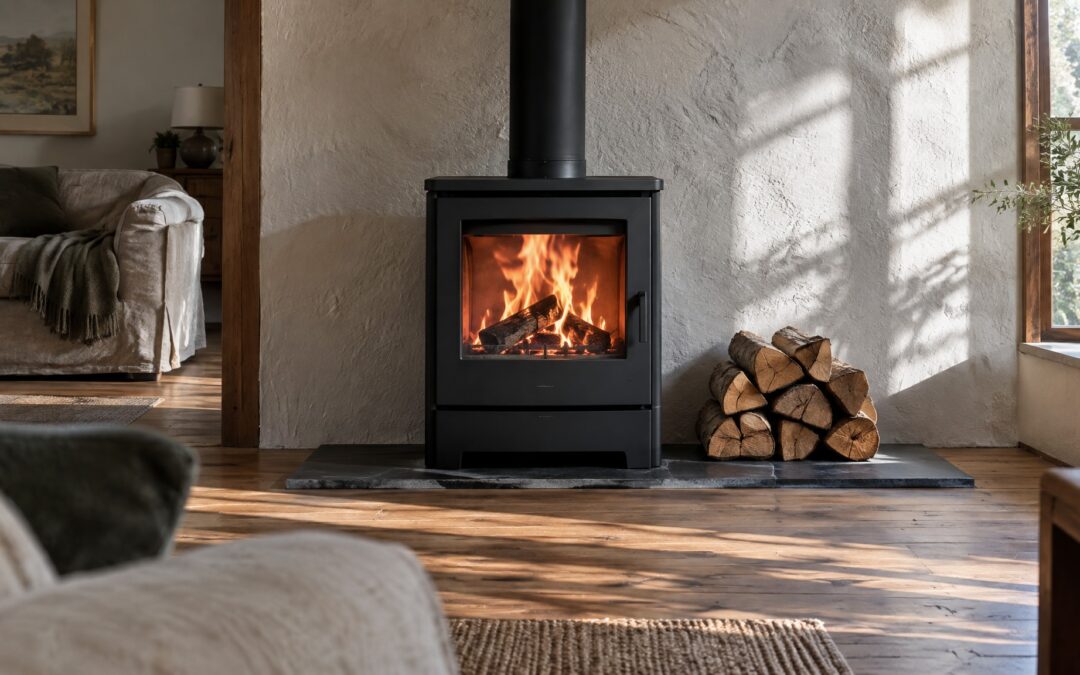
Picture a cold July evening in the lounge. The wood is stacked, the glass is glowing, and the room is warm all the way to the back of the couch. That is what the right kW rating feels like, and it’s what this guide helps you get.
Choosing the right kW output for your fireplace comes down to a few simple measurements and an honest look at your home. If you’re still weighing up fuel type and style, start with how to choose a fireplace for your home. Once you know you want a closed combustion wood fire, come back here and size it properly.
What the kW Rating Means on a Wood Fireplace
A kW rating tells you how much heat the fireplace delivers into your room. It isn’t the heat the fire makes in the firebox, and it isn’t a measure of how big or impressive the unit looks.
Think of it like the engine size on a bakkie. It tells you what the unit can deliver, and the rest of your home decides whether that’s the right amount.
Nominal Output Versus Maximum Output
Most listings give two figures. Nominal output is the steady, everyday heat you get when the fire burns the way it was designed to. Maximum output is the top figure when you run the unit hard, which is something you’d do for short stretches rather than all evening.
The Dovre 325 CBS Woodburning Closed Combustion Fireplace is a good example. It’s listed at 5kW nominal and 7kW maximum, so plan your room around the 5kW, and treat the extra 2kW as a reserve for a bitterly cold night.
Size is also a poor guide to output. The Henley Sherwood 5kW Multifuel Fireplace and the Henley Sherwood 8kW Multifuel Fireplace share a family name but carry different ratings, so the kW figure on the spec sheet tells you the output, not the model name or the look of the stove.
One more trap: watt and BTU figures. They appear on electric and gas heater listings, and they need converting before you compare them with a wood fireplace. One kW is 1,000 watts, and one kW is roughly 3,412 BTU per hour.
Measuring Your Room for Heat Output
So, what size fireplace do you need? It’s the one whose nominal output suits the volume of the room you actually sit in, adjusted for how well that space holds its heat. Both parts matter, and the next two sections take them in turn.
Work Out the Volume, Not Just the Floor Area
Take a typical lounge. You measure the floor, length times width, then multiply by the ceiling height. That gives you the volume of air the fire has to warm.
Now picture two rooms with the same floor area. One has a standard ceiling. The other has a vaulted ceiling with a mezzanine above. The second room holds far more air, so it needs more output, even though a floor plan makes them look identical.
This is why the Dovre 325 CBS quotes its heating area in cubic metres: 140m³. Measure your room the same way, and you can compare it with a unit’s stated heating area directly.
Skip the one-size-fits-all rule of thumb you may have seen online. Your ceiling height, your walls and your windows all change the answer, and a single figure per square metre ignores every one of them.
Allow for Open-Plan and Adjoining Rooms
Heat doesn’t stop at a doorway. If your lounge opens onto a dining area or kitchen, the fire is heating all of it, and you’ll need more output than the lounge alone suggests.
Closed doors help the other way. A snug with a door you can shut behaves like a small, self-contained space, and a modest unit will warm it quickly.
Decide which room matters most, and make that your target. Most people want the spot where the family sits in the evening to be properly warm, and they’re happy for the passage to be merely mild. Size for that room, then allow a little extra if it opens into other spaces.
How Insulation and Glazing Change the kW You Need
Two lounges with identical volumes can need quite different fires. One holds its heat for hours, while the other loses it as fast as you make it, and you’ll feel the difference in how often you feed the fire and how warm the corners get.
Insulation, Glazing and Draughts
Several things pull the number up or down:
- Ceiling and wall insulation. A well-insulated roof keeps heat in the room instead of letting it escape upward.
- Glazing. Single panes lose heat quickly. Double glazing holds it far better.
- Draughts. Gaps around old windows and under exterior doors leak warm air all evening.
- External walls. A room with three outside walls loses more heat than one tucked into the middle of the house.
If your home scores badly on several of these, lean towards the higher end of the band you’ve worked out. If it’s well sealed and insulated, you can comfortably go lower.
This also tells you how to use a fireplace kW calculator. It is only as good as the information you give it. A calculator that asks only for floor area will give you a rough guide at best, because it can’t see your ceiling height, your glazing or your draughts. Use it as a starting point, then adjust for the things it can’t see.
Coastal Versus Inland Winters
Where you live in KwaZulu-Natal matters too. Homes on the Upper Highway tend to run cooler on winter evenings than mild coastal spots such as Umhlanga or Umdloti, so the same fire may need more output inland than on the coast.
That doesn’t mean coastal homes should skip a fireplace. A fire in Durban North or Amanzimtoti is usually about comfort on a cool evening and the mood it creates, so you may be happy with a smaller unit. In Hillcrest or Kloof, you’ll be leaning on the fire for real warmth, and it’s worth allowing more.
Matching kW Output to Your Space
Here’s where the range sits, from 5kW up to the 16 kW Henley Druid. Treat these as reference points to help you picture each band, not a shopping list. For the full picture of how the two main makers differ, see Dovre and Henley compared side by side.
Compact Outputs for Snugs and Well-Insulated Rooms
The compact band suits a snug, a study, a bedroom-sized lounge or a room that’s properly insulated and closes off from the rest of the house. Three units sit here:
- The Henley Sherwood 5kW Multifuel Fireplace
- The Dovre 325 CBS Woodburning Closed Combustion Fireplace, at 5kW nominal and 7kW maximum
- The 6.5 kW Henley Elmwood convection fireplace
If you’re sizing for a smaller space, these closed combustion options for a small room go into more detail.
This band is not for a large open-plan living area or a draughty older home. Push a compact unit hard in a space that’s too big for it and you’ll be disappointed, however good the fire looks.
Higher Outputs for Open-Plan Living and Cooler Homes
Step up when the volume is large, the ceiling is high, the space flows into other rooms, or the house loses heat easily. Three units cover this band:
- The Henley Sherwood 8kW Multifuel Fireplace
- The Dovre Tai55 WD (Wood Burning Closed Combustion Fireplace), at 11kW nominal
- The 16 kW Henley Druid Multifuel Fireplace
The Tai55 WD is a useful middle reference at 11kW nominal, sitting between the compact units and the Druid at the top of the range. You’d look at it for a generous living area. The 16 kW Druid is for the biggest, coolest spaces, such as a large open-plan home on the Upper Highway with high ceilings and plenty of glass.
Once you have a band in mind, budget is the next question. Here’s what closed combustion fireplaces cost in South Africa.
Efficiency: How Much of the Fuel Becomes Room Heat
Efficiency and output are two different things, and people often mix them up. Output tells you how much heat the room gets, while efficiency tells you how much wood you burn to deliver it.
A more efficient unit doesn’t change how many kW your room needs. It simply gets you there with less wood, so you’ll be restocking the log basket less often.
The Dovre 325 CBS is listed at 81% efficiency. The Henley Sherwood 5kW Multifuel Fireplace is rated at nearly 82% with an A+ energy rating, and it has an airwash system that helps keep the glass clean. Burn design plays a part as well. The Canterbury Closed Combustion Wood Fireplace has a secondary and tertiary burn with twin baffles, which recycle the smoke from the first burn and burn it off before it leaves the stove.
If you’re comparing these units with open fires, closed combustion versus open fireplaces explains why a closed unit gets more heat from the same wood.
Whatever you choose, use dry, seasoned wood. Damp logs waste energy boiling off moisture, and no unit will reach its rated output on them.
Common Sizing Mistakes to Avoid
The most common mistake is going too big. It’s tempting, because you think more output can’t hurt. But a unit that’s much larger than the room tends to be run low to stop the room overheating, and a fire burning low runs smoky and wastes fuel.
You’ll also end up opening windows in your own lounge in the middle of winter, which is not what you bought a fireplace for.
Going too small has its own problems. A small unit pushed hard all evening still leaves the far corners cold, and you’ll be burning it flat out just to keep up.
The fix is to size for the volume and insulation you actually have, then pick the nominal output that suits.
One last point that’s easy to miss: the rated output assumes the fireplace is installed correctly and connected to a suitable flue. A great unit on a poor flue won’t perform. Confirm both with an installer before you buy.
A Step-by-Step Checklist for Choosing Your kW Output
Work through these in order, and you’ll land on a sensible band:
- Measure the volume. Floor area times ceiling height for the room you sit in, and allow for any open doorways into other spaces.
- Note the insulation and climate. Check your ceiling, glazing, draughts and external walls, and think about whether you’re inland or on the coast.
- Decide what the fire is for. Is it mainly heat on cold evenings, or mainly ambience?
- Pick a nominal band. Compact for snugs and well-sealed rooms, higher for open-plan and cooler homes.
- Check efficiency and flue needs. Look at how the unit burns, and confirm the flue with your installer.
If you’d rather talk it through, send the Firehouse team your room measurements and how you plan to use the fire. We’ll go through the numbers with you and point you to the right unit in our Closed Combustion Wood Fireplaces range, with no pressure to buy.
Frequently asked questions
How much does it cost to run a 1500 watt electric fireplace?
A 1500 watt heater draws 1.5 kW, so it uses 1.5 kWh of electricity for every hour it runs at full power. Multiply that by your tariff per kWh to get the hourly cost. Check your latest municipal or prepaid rate, since it changes.
How many BTU do I need for a gas fireplace?
Work out your kW requirement first, then convert it: one kW is roughly 3,412 BTU per hour. A room that needs 5kW of heat needs about 17,000 BTU per hour. Insulation, glazing and ceiling height shift that figure, just as they do for a wood fire.
Can I plug my TV and electric fireplace into the same outlet?
It’s best not to. A 1500 watt heater draws a heavy, steady load, and a shared outlet or extension lead can overheat. Ask a qualified electrician to check the circuit. A wood-burning closed combustion fireplace avoids the problem, because it doesn’t use your plugs at all.
Can I buy a bigger fireplace and just run it low?
It isn’t a good idea. A unit that’s too big for the room is usually run low to stop it overheating, and a fire that burns low tends to run smoky and use fuel inefficiently. Size for the room’s volume and insulation, and choose the nominal output that matches.