
Best Braai Brand for Entertaining Large Groups: Top Picks
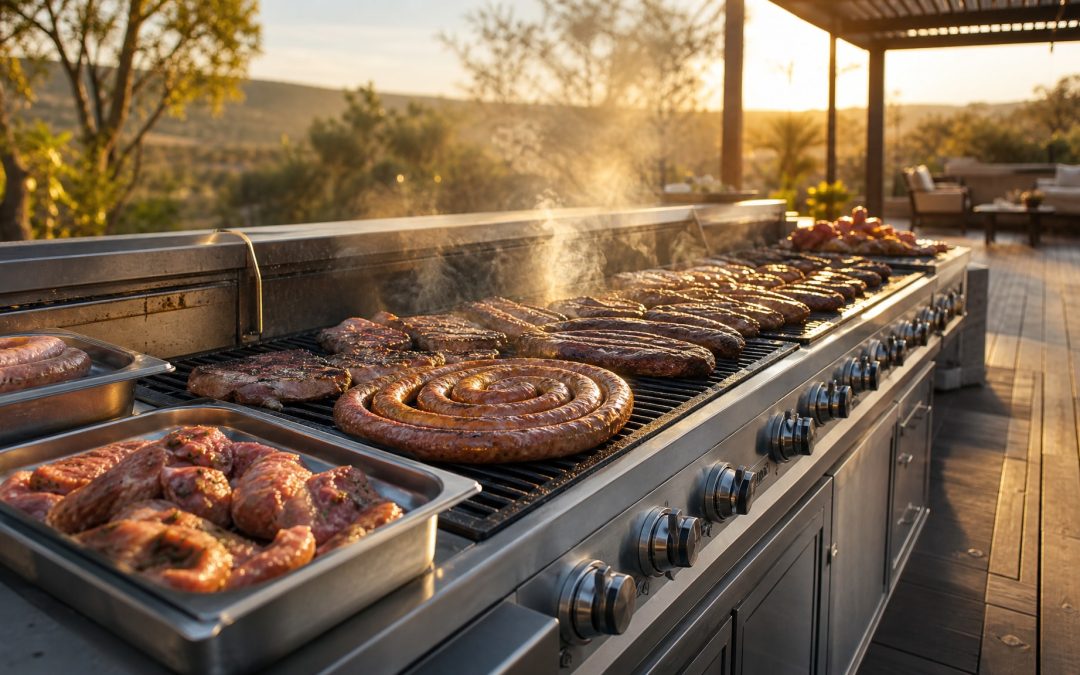
Hosting twenty or more guests changes the physics of a braai. You’re no longer cooking for a family dinner where timing can flex and everyone waits their turn. You’re running a service line, and that demands consistent heat, fast recovery, and enough surface area that people aren’t standing around hungry while you catch up. Finding the best braai brand for entertaining large groups means looking past standard residential specs and focusing on units built for sustained, high-volume output, without losing the flavour your guests expect from a proper South African gathering.
This guide sticks to capacity and workflow for big events, not the features that matter most for intimate dinners. If your typical guest list stays under fifteen, our guide to braai brands for smaller family gatherings will be more useful. But if you’re regularly hosting rugby crowds, milestone birthdays or community events, the requirements shift toward commercial-grade performance and durability.
What Defines a Large Group Braai in South Africa
A standard four-burner gas braai can’t run continuous service for thirty people. You’ll get cold spots, or you’ll end up cooking in batches while early guests wait and latecomers eat cold food. Large group entertaining typically needs at least 6,000 square centimetres of primary cooking surface to avoid bottlenecks during peak service. That’s roughly six main burners, or a dedicated griddle station alongside traditional grill grates. At that size you can sear boerewors, rest chops and toast buns at the same time, instead of shuffling food onto warming racks before it’s properly coloured.
Grill Surface Area vs. Guest Count
Square footage matters more than burner count, because heat distribution across a wide grate determines whether you can actually use the whole surface. Cram six burners into a narrow chassis and you get intense hot zones right over the flames, with cold valleys between them. A wider firebox spreads heat evenly across the full cooking area instead. When you’re evaluating a large braai for parties, measure the usable primary grate space. Don’t trust marketing claims about “total cooking area” that lump in secondary racks you can’t rely on for raw protein.
You need enough room to hold distinct temperature zones without giving up active grilling space for resting meat.
Multi-Zone Cooking for Diverse Menus
Feeding a crowd means juggling different proteins, vegetables and dietary needs, each wanting a different heat level and timing. Independent heat zones aren’t optional here. You need them to keep chicken thighs at a safe internal temperature while flash-searing steaks and gently warming garlic bread, all on the same unit. Without that separation, you’re a short-order cook handling one thing at a time, not a host running a meal service where everything lands on the table hot and properly finished.
Top Gas Braai Brands for High-Volume Entertaining
Gas gives you predictable temperature control and fast heat recovery that wood-fired units can’t match when you need to feed dozens of people in a tight window. The trade-off is mechanical complexity. Choosing a multi-burner braai South African homeowners can rely on means prioritising build quality and warranty coverage on the parts that matter, and proven performance under load, rather than chasing the highest BTU number on the spec sheet.
Weber Summit Series for Crowd Control
The Weber Summit series gets specified for large gatherings often, thanks to its six-burner layout, which lets you sear and slow-roast across separate zones at the same time. The platform includes a dedicated sear station and a smoker burner, so you can add wood-chip smoke to gas-cooked meat or get a restaurant-quality crust on steak without flaring up the vegetables next to it. Firehouse builds its large-group braai picks on hands-on testing of heat distribution and recovery time under full load, so the models we recommend perform at capacity, not just in the showroom.
You can explore Weber models suitable for large parties to compare configurations against your typical guest count and menu.
Napoleon Prestige Pro for Multi-Burner Versatility
Napoleon’s Prestige Pro line competes directly in the high-capacity segment, with infrared rear burners and generous griddle surfaces that handle batch-cooking breakfast items or stir-fries alongside the usual braai fare. The brand’s lift-ease roll-top lid needs less clearance on a covered patio while still holding heat well, and the stainless steel construction stands up to coastal humidity better than a lot of powder-coated alternatives. Napoleon pricing and model details are worth a look if you’re weighing the premium price against long-term durability for frequent hosting.
These units aren’t for occasional users who braai once a month or less. The maintenance and fuel consumption only pay off with regular, high-volume use.
Built-In Wood Braai Solutions for Permanent Event Spaces
Wood-fired cooking gives you flavour depth gas can’t touch, but scaling it up for events takes purpose-built infrastructure, not an adapted domestic fireplace. Built-in wood braais made for spit roasting and long-burn catering prioritise thermal mass, ember management and rotisserie capacity over the looks that dominate indoor fireplace design.
Jetmaster Maxi Units for Spit Roasting Capacity
Jetmaster Maxi built-in units remain the benchmark for wood-fired spit roasting because the firebox is big enough for a whole lamb and several chickens at once. The design keeps radiant heat even across the full spit length, instead of concentrating it in hotspots that char the outside before the inside reaches a safe temperature. That matters when you’re cooking expensive protein for paying guests or a big celebration. The steel construction handles daily firing without warping, which makes these viable for venues, or homes, that entertain weekly rather than seasonally.
Custom Brick vs. Modular Steel Kits
Permanent brick installations hold heat better once they’ve saturated, which stabilises cooking temperature during long roasts and cuts fuel use. Modular steel kits give homeowners more flexibility if they might reconfigure the entertaining area or move house, though they need more active fire management to keep output consistent. Our built-in braai buyer’s guide covers the installation side in more detail, for anyone weighing permanence against flexibility.
Choose brick if your entertaining layout is settled and you’d rather have fuel efficiency than future flexibility.
Essential Features Beyond Grill Size
Primary cooking surface gets all the attention, but the secondary features decide whether you can sustain service through a four-hour event without burning out or serving cold food. Warming racks, side burners for sauces and sides, and proper grease management turn a large grill into a functional outdoor kitchen, one that can handle a full meal, not just the meat.
Warming racks need real usable space and enough airflow to hold food at serving temperature without carrying on cooking it or drying it out. Side burners rated for heavy pots let you make pap, gravy or heated drinks without leaving the braai station, so you stay anchored at the centre of things instead of shuttling between kitchen and patio. Grease management gets far more important at volume, because fat from dozens of sausages and chops can trigger flare-ups that ruin food and turn dangerous mid-service.
Freestanding vs Built-In: Choosing Your Format
Mobility lets you reposition your braai for wind protection, shade, or to sit closer to wherever guests have gathered as the evening moves. A built-in installation anchors your entertaining space for good, becoming a focal point that can even add resale value on a property marketed to serious entertainers. The choice comes down to how settled your current property is, and whether you’ll need flexibility for venue hire or seasonal changes down the line.
Freestanding units need clearance on all sides for safe operation and ventilation, which eats up more total footprint than a built-in that sits against a masonry wall or cabinetry. Built-in formats need professional installation and sign-off against local building regulations, which adds upfront cost and lead time a freestanding purchase avoids. Think about whether your entertaining habit is tied to this property, or whether it’s a lifestyle you’ll carry to the next address.
Plan guest circulation around the cooking zone too. It’s easy to forget until twenty people are standing in a bottleneck near the grill.
Budgeting for Commercial-Grade Home Entertaining
Premium large-capacity braais cost more than the sticker price suggests. Total cost of ownership includes gas that scales with burner count and how often you fire it up, a cover sized for an oversized unit, replacement grates and flavorizer bars that wear out faster under heavy use, and possibly ventilation upgrades if it’s covered. Knowing these costs upfront saves you from sticker shock later, and helps you keep the equipment in good shape instead of letting it deteriorate.
Price tiers for event-capable braais come down to steel grade, burner warranties and manufacturing tolerances, all of which affect how long the unit lasts under heavy use. Entry-level large formats might hit the surface-area number but skimp on the durability that matters most when you’re relying on the braai for back-to-back weekend events. Our budgeting advice for braai purchases can help you match spending to realistic performance rather than an aspirational spec sheet.
Set money aside for professional installation and an initial seasoning burn before you spend the rest on accessories.
Expert Guidance on Selecting Your Braai Partner
Buying a large-capacity braai is a different exercise to buying a standard residential appliance, because sizing mistakes compound fast when you’re responsible for feeding dozens of people. Someone who understands local conditions, fuel availability, and how South Africans actually entertain can point you to the right capacity, instead of just selling you the most expensive unit in stock. That matters most in the borderline cases, where guest counts swing or menus change a lot between a summer braai and a winter gathering.
After-sales support decides whether your investment lasts for decades or turns into an expensive liability the day a part fails outside warranty. A retailer that stocks consumables, carries spare parts and has a working relationship with manufacturer technicians is one that stands behind what it sells after the sale, not just at the till. At Firehouse, every recommendation comes from hands-on familiarity with how these units perform in real South African conditions, not catalogue specs.
Contact us for personalised sizing advice for your entertaining patterns, or visit our showroom to see large braai capacity in person before you commit.