
Braai and Patio Heater Combo Ideas for Year-Round Use
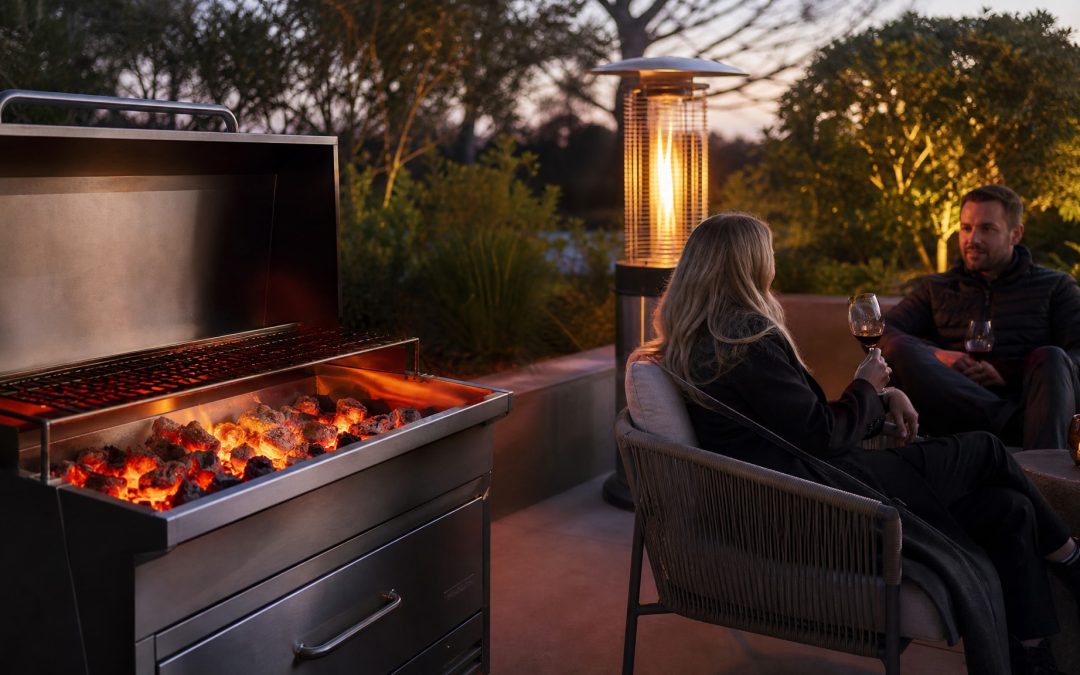
South African winters demand more than a good fire to keep the braai tradition alive. Coals throw intense heat straight at the food, but they rarely warm the people sitting a few metres away once the sun drops. That’s where a bit of planning around braai and patio heater combos turns a summer-only space into something you use all year.
Combining dedicated heating with your cooking setup isn’t about replacing the fire. It’s about stretching the usability of your outdoor area when you need it most. You want guests lingering over coffee or wine, not retreating indoors because the air’s turned biting cold. Get the combination right, and your hospitality doesn’t hibernate just because the calendar’s shifted.
Why Combine a Braai and Patio Heater for Winter Entertaining
Cooking heat and ambient warmth aren’t the same thing, and that gap is the real challenge of winter hosting in South Africa. A roaring fire sends intense heat upward into the flue or straight onto the grid, but the seating area around it stays exposed to the chill. Rely on the braai alone for warmth and guests end up crowding dangerously close to open flame, or shivering at the edges.
A dedicated patio heater lets you split these two jobs properly. Your fire focuses on the food; a second heat source keeps a steady envelope of warmth around the people socialising. That split is what stretches your outdoor season well past summer and makes the heater worth having for the rest of the year.
Separating the two jobs actually improves the cooking experience too. With nobody jostling for position near the coals just to stay warm, you get clearer access to the grid and safer clearance around hot surfaces. Feeding people and keeping them warm are related tasks, but they’re not the same task, and treating them that way makes both easier.
Freestanding Braai Units That Double as Ambient Heat Sources
Freestanding units sit between a permanent installation and a portable one, which is why they’re often the fastest way to get winter entertaining sorted. They skip the masonry work entirely while still throwing off real radiant heat for the cook and whoever’s standing nearby.
Radiant Heat Without Renovation
Freestanding braai units like the Home Fires range skip the masonry work and still deliver real radiant heat, which makes them a good fit for retrofitting an existing patio for winter. The Home Fires 1000 Freestanding Braai (around ZAR 26,100) and the larger Home Fires 1200 Freestanding Braai (around ZAR 28,260) both ship with their own flue pipes and cowl, so there’s no structural work involved, just a level, solid, non-combustible floor to set them on.
These units work well on covered patios where ventilation is already sorted but brickwork isn’t practical or allowed. You get the thermal mass and look of a traditional braai with the installation simplicity of an appliance you can place and walk away from. If you’re renting, or waiting for the right moment to renovate, that’s the difference between skipping winter entertaining and just getting on with it.
If you’re weighing up which model fits your space, our freestanding braai buyer’s guide breaks down the dimensional and output differences. That’s worth a read before you buy on looks alone, matching the unit’s heat footprint to your actual seating layout matters more than it seems.
Built-In Braai Setups with Integrated Heating Zones
A permanent installation anchors your entertaining space and opens up zoning that portable units can’t match. Commit to a fixed location and you can plan heating around it that works with the cooking fire instead of fighting it. That’s the difference between a backyard setup and a properly designed outdoor room.
Engineering for Continuous Winter Use
Home Fires builds its Economaster range from 2.5mm mild steel, which is built to take continuous high-heat use whether the unit sits indoors or out. The 700 Basic Economaster Built-in-Braai (around ZAR 6,830, 58kg) and the wider 1000 Economaster Built-in-Braai (around ZAR 11,730, 108kg) both hold and release heat long after the coals have died down. That steel mass works like a thermal battery, giving off stored warmth gradually into the space around it.
With a permanent anchor point like this, you can place patio heaters exactly where they’ll warm seated guests without disturbing the braai’s ventilation path. Overhead infrared heaters or angled wall-mounted units can wash the seating area in warmth while leaving the cooking column clear. For more on combining permanent structures with heating, our piece on built-in braai and fireplace combos covers layout in more detail.
Built-in setups don’t solve everything, especially if your wind patterns shift through the season or your guest numbers swing wildly between gatherings. They’re excellent for predictable, recurring entertaining in a sheltered spot, but they can’t adapt the way a mobile setup can.
Mobile Trolley Braais for Flexible Outdoor Heating Layouts
Adaptability matters most when the weather won’t cooperate with your plans. A mobile trolley braai lets you reposition the whole cooking operation on the fly, whether that’s wind direction, rain, or guests drifting to a different corner of the patio.
Mobile trolley braais let you shift the cooking zone away from cold drafts while keeping your patio heaters exactly where seated guests need them. The Home Fires 800 Mobile Trolley Braai (around ZAR 9,040) and the Home Fires 1m Trolley Braai (around ZAR 8,810) come with integrated ashpans, grids, potjieholders and wheels, so relocating mid-event is straightforward. Chase the shelter or dodge a sudden downdraft without packing up or asking guests to move.
That mobility pairs well with a patio heater you can also reposition as the evening changes. Instead of locking into one thermal layout, you adjust both independently as conditions shift. Static setups tend to assume a still evening; mobile ones plan for the fact that winter nights rarely stay that way.
Worth knowing before you commit: trolley braais need storage space and the wheels need the odd bit of maintenance to keep rolling properly. You’re trading the thermal mass and permanence of a built-in unit for positional freedom, which suits some hosting styles and frustrates others who’d rather set it up once and leave it.
Firepits with Braai Functionality for Cosy Gatherings
Not every winter gathering is about serious grilling. Sometimes it’s conversation first, with food as a secondary activity. A firepit with braai function is built for exactly that.
The Enji Wood Firepit shows how rustic steel with natural wood legs can work as both a functional braai and a social heating centrepiece for a smaller group. The Enji Wood Firepit with Braai Function (around ZAR 3,299) is built from durable, heat-resistant steel, and its looks invite people to pull chairs in close rather than keep a respectful distance. The lower profile and all-round radiant heat give it a campfire feel that an upright braai doesn’t really manage.
Go in knowing what it won’t do compared to a dedicated braai: you won’t get the same temperature control or grease management, and the low height means bending or low seating for food prep. But if ambiance and shared warmth matter more to you than culinary precision, it’s a genuinely good option.
Deciding between a firepit and a full outdoor fireplace comes down to weighing intimacy against capability. Our outdoor fireplace versus fire pit comparison lays out the trade-offs. It really comes down to whether your winter evenings lean toward active cooking or just sitting around the flame.
Strategic Placement of Patio Heaters Around Braai Areas
Getting the placement right means understanding how smoke and heat move in a confined space. A patio heater too close to the braai can disrupt smoke extraction, create uncomfortable hot spots, or sit too near combustible material. Too far away, and it wastes energy without warming anyone.
Stick to the minimum clearance your braai and heater manufacturers specify, typically one to two metres laterally, and considerably more vertically for overhead units. Aim the heater at the seating zone rather than trying to warm the whole patio at once. That’s what keeps a braai area comfortable in winter without pushing smoke back toward guests or trapping it under a covered ceiling.
Test the layout during an actual cook before you host, with both systems running, and watch how the smoke behaves. Windbreaks, pergola beams and nearby walls all shift airflow in ways you can’t predict on paper. A quick trial run catches the problems that only show up once the flames are actually lit.
Weather protection matters as much as placement for keeping the space usable on wet or windy nights. Our piece on outdoor braai area cover ideas is worth a look so rain or wind doesn’t undo all the heating planning you’ve just done.
Choosing the Right Combo for Your Entertaining Style
Your own hosting patterns should drive what you buy, not a general recommendation or whatever’s trending. Think about how often you entertain in winter, typical guest numbers, how involved the menu gets, and whether your space is sheltered or catches the wind. Those answers point you toward permanent infrastructure, mobile flexibility, or something in between.
Space size matters more than it looks. A smaller covered patio often does best with a freestanding unit that handles both cooking and radiant heat without eating up floor space. A larger open deck might need a built-in anchor plus a few directional heaters to cover the distance.
Installation preference and budget timeline matter too. A built-in system asks for upfront investment and a permanent commitment, but rewards you with better long-term thermal performance. Mobile and freestanding options cost less upfront and let you test your winter habits before you commit to any masonry.
How often you actually use the setup decides whether the premium features are worth it. A weekly winter host gets real value from higher-spec equipment built for continuous use. An occasional entertainer might find a versatile mid-range option does the job without paying for capacity they’ll rarely touch.
Frequently Asked Questions
What are some creative braai ideas for winter?
Consider using a firepit with braai functionality like the Enji Wood Firepit for intimate gatherings where ambiance matters as much as cooking. Mobile trolley braais allow you to reposition based on wind and guest flow, enabling flexible layouts that adapt to changing winter conditions. Pairing any braai with dedicated patio heating extends usability beyond what cooking heat alone can provide.
What are some ideas for heating an outdoor patio?
Combine your braai’s radiant heat with dedicated patio heaters positioned to warm seating zones without disrupting ventilation. Freestanding braai units like the Home Fires range provide dual-purpose heating without requiring masonry work. Strategic placement matters more than raw output; target seated areas specifically rather than trying to heat entire open volumes.
How do I build a braai area for year-round use?
Start with a level, non-combustible foundation and ensure adequate ventilation for both cooking and supplemental heating. Built-in options like the Economaster range require 2.5mm mild steel construction for continuous winter use, while freestanding units eliminate masonry entirely. Plan heater placement and weather protection simultaneously rather than treating heating as an afterthought.
What are the different types of braai stands available?
Freestanding units like the Home Fires 1000 and 1200 offer permanent presence without brickwork, requiring only solid flooring. Mobile trolley braais such as the 800 Mobile and 1m Trolley models provide repositioning flexibility via integrated wheels and compact footprints. Built-in Economaster braais serve as fixed anchors engineered from 2.5mm mild steel for continuous high-heat operation.