
Braai Cover & Storage Tips to Protect Your Investment
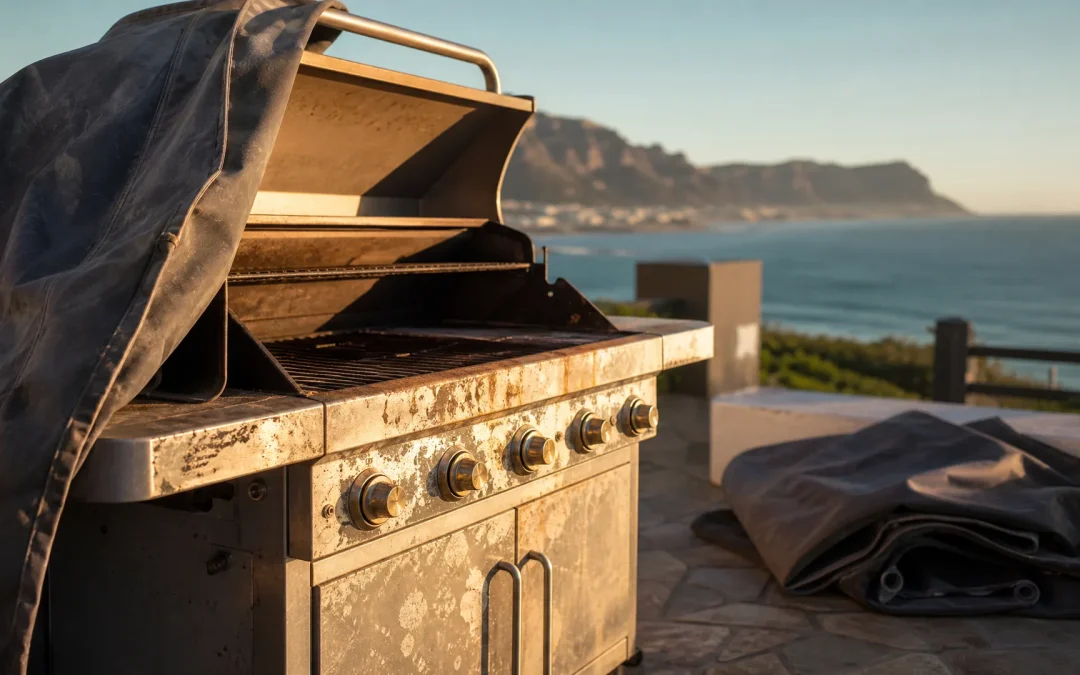
A braai is one of the biggest lifestyle investments a South African home makes. Yet most cover and storage advice you’ll find online comes from American or European BBQ sites. That advice ignores our UV load, our coastal salt air, and our habit of leaving a braai outside for eleven months of the year. Good braai cover and storage tips need to start with our climate, not a generic template.
Why South Africa’s Climate Makes Braai Covers Non-Negotiable
South Africa doesn’t have one climate. It has several, and each one attacks a braai differently. Understanding this is the first step to protecting your braai from rust and sun damage.
UV intensity and sun damage on braai finishes
South Africa’s sun is intense for most of the year. That UV load does real damage. Plastic knobs turn brittle. Paint fades and chalks. Powder-coated lids can crack after a couple of summers in direct sun.
A cover isn’t just about keeping rain off your braai. It slows down the sun’s daily assault on plastic, paint, and rubber seals.
Coastal salt air vs Highveld storms vs dry winters
Coastal homes in Cape Town or Durban deal with salt-laden air that corrodes stainless steel and chrome far faster than inland properties. Covers and storage routines need to work harder near the sea.
On the Highveld, sudden afternoon thunderstorms in summer can turn a braai from bone-dry to soaked in minutes. That kind of quick soaking speeds up rust on grates and fittings.
Inland regions with dry winters face a different problem. Dust and grit build up under a loose cover. UV exposure carries on even when it hasn’t rained in weeks.
Choosing the Best Braai Cover for South African Conditions
Picking the best braai cover for South African weather isn’t about buying the thickest, heaviest one you can find. It’s about matching material and fit to your setup and your location.
Braai cover size guide: getting the fit right
A cover that’s too loose flaps in the wind and lets rain blow in sideways during a Highveld storm. A cover that’s too tight strains at the seams and tears within a season.
Measure your braai’s width, depth, and height before you buy. Include any side tables or hooks that stick out. If you own a portable model, check the folded dimensions rather than the open cooking position. Built-in units need covers cut to the exact firebox and grate footprint, not a generic rectangle stretched to fit.
UV-resistant materials worth paying for
Look for covers made from UV-stabilised fabric, not just any waterproof material. Standard PVC covers can go brittle and crack within a year or two under South African sun.
Breathable, ripstop fabrics with taped seams tend to outperform cheap vinyl covers here. They shed rain without trapping condensation underneath, and that matters as much as blocking UV. Firehouse’s curated range is hand-picked by industry insiders, who also advise customers on the covers and storage setups that suit each specific model. That kind of guidance saves you from buying a cover that looks right online but fits badly in practice.
Braai Weatherproofing Tips Beyond the Cover
A cover is one layer of protection. Real braai weatherproofing in South Africa comes down to a handful of small habits that add up over a season.
Protecting a gas braai left outside year-round
If your gas braai lives outside permanently, wipe down the lid and side panels after every use, before you fit the cover. Trapping grease and moisture under a cover invites rust and mould.
Check the gas hose and regulator connection every few weeks for cracking or looseness. A soapy water test on the fittings will show up small leaks before they become a safety issue. It’s one of the simplest outdoor braai protection tips, yet it’s the one most people skip.
Rust prevention for grates, burners and fittings
Cast iron and steel grates need a light coat of cooking oil after cleaning, especially before winter storage. That stops moisture from sitting on bare metal and starting surface rust.
Stainless steel burners and fittings benefit from an occasional wipe with a stainless-steel-safe cleaner, particularly in coastal areas where salt air speeds up pitting. Check rubber seals and gaskets for cracking too. A failed seal lets moisture reach parts a cover can’t protect once the lid is closed.
How to Store a Braai in Winter
Winter storage looks different depending on whether you’re dealing with a dry Highveld winter or a damp, salty coastal one. Either way, a few extra steps now save you a rough surprise come spring.
Winterising a gas braai: gas lines, regulators and covers
Before winter sets in, disconnect the gas bottle if the braai will sit unused for long stretches. Store the bottle upright in a ventilated spot away from direct heat.
Give the gas line and regulator a visual check for cracking or perishing rubber. Then fit a properly sized cover over the whole unit. In coastal areas, check under the cover more often through winter, since trapped salt-laden moisture works faster than in dry inland air.
Off-season care checklist for charcoal and wood braais
Empty all ash completely before covering a charcoal or wood braai for the season. Leftover ash draws in moisture and can corrode the firebox from the inside out.
Give the grate and firebox a final scrub, then a light oil coating on bare metal. On the Highveld, dry winter air means less rust risk. Cape winters bring damp, though, so check under the cover more often if you’re near the coast.
Storage Ideas for Portable and Built-In Braais
Storage needs differ hugely between a portable braai you wheel in after every use and a built-in braai that’s part of your patio.
Portable braai storage solutions for small gardens
Small gardens rarely have room for a dedicated braai shed. A fitted cover plus a sheltered spot against a wall is often the practical answer. Look for models with wheels: being able to move a braai under an overhang during a sudden Highveld downpour beats leaving it exposed.
A weatherproof storage box or cupboard on a patio works well too. It keeps tools, gas bottles, and cleaning kit together in one dry spot.
Built-in braai cover options and storage shed ideas
Built-in braais can’t be moved, so the cover has to do more work over time. A fitted cover for the firebox and grate area, cut to that specific unit’s dimensions, protects the parts that matter most even if the braai sits under a patio roof.
A built-in braai under a patio roof still needs a fitted cover for its firebox and grates. UV exposure and dust do as much damage as rain over a Highveld or Karoo dry season. For larger outdoor entertainment areas, a small lockable storage shed or cupboard nearby is worth considering. It keeps tools, oil, and spare covers out of the weather entirely.
Building a Simple Braai Care Routine That Protects Your Investment
Covers and storage only work if they become a habit rather than a one-off purchase. Keeping your braai in good condition comes down to a handful of small, repeated actions rather than one big annual clean.
A seasonal maintenance calendar for SA homeowners
In spring, give your braai a full clean, check all seals and fittings, and swap in a fresh cover if last year’s has faded or torn. In summer, wipe down after each use and keep the cover on between braais to fight UV damage.
In autumn, start prepping for winter storage: empty ash, oil bare metal, and check gas lines. In winter, check under covers periodically, especially near the coast, and keep gas bottles stored safely away from the unit if it’s not in regular use.
Firehouse’s team consistently points customers toward correctly sized, UV-stabilised covers rather than generic ones. An ill-fitting cover traps moisture and can do more harm than no cover at all. If you’re weighing up which braai cover and storage setup suits your home, it’s worth browsing Firehouse’s expert-picked accessory range, or getting in touch for advice matched to your specific braai and your part of the country.